Rammed Earth And Brick Vaults Shape A Grounded Vadodara Retreat
MS Design Studio’s 6,000 sq. ft. Vadodara weekend home redefines arrival with brick vaults, rammed-earth walls, and natural contours that blur the threshold between architecture and earth.
- 28 Oct '25
- 6:23 pm by Mehar Deep Kaur

Some structures are drawn on paper. Others are drawn by the land itself. This weekend retreat on the verdant fringe of Vadodara belongs firmly to the latter. Envisioned by Manav Patel and Shivani Patel of MS Design Studio, the home’s layout was dictated not by architectural grids, but by the site’s natural slope and the mature trees scattered across it.
Before a brick was laid, three discerning requests shaped the project’s DNA. First: leave the land as it is. No cutting, no flattening; let the home rise and fall with the slope. Second: protect every tree — not one could be felled. Third: make it feel private — even in openness, the occupants sought to not be watched. “That paradox became our invitation — to design not an entrance, but an experience that unfolds, layer by layer”, avers Manav.
And so, the journey begins under a canopy of trees. A driveway threads between trunks and leads to discrete parking, before dissolving into a narrow path. Overhead, a creeper-laden trellis acts as a green tunnel, muting the world behind. Then comes a low black-stone rubble wall, grounding one’s steps. Only when the senses have quieted does the house begin to reveal itself.
Also Read: #DPExclusive: Inside Villa Collagio, A Sculptural 15,000 Sq. Ft Tuscan-Style Home In Chandigarh
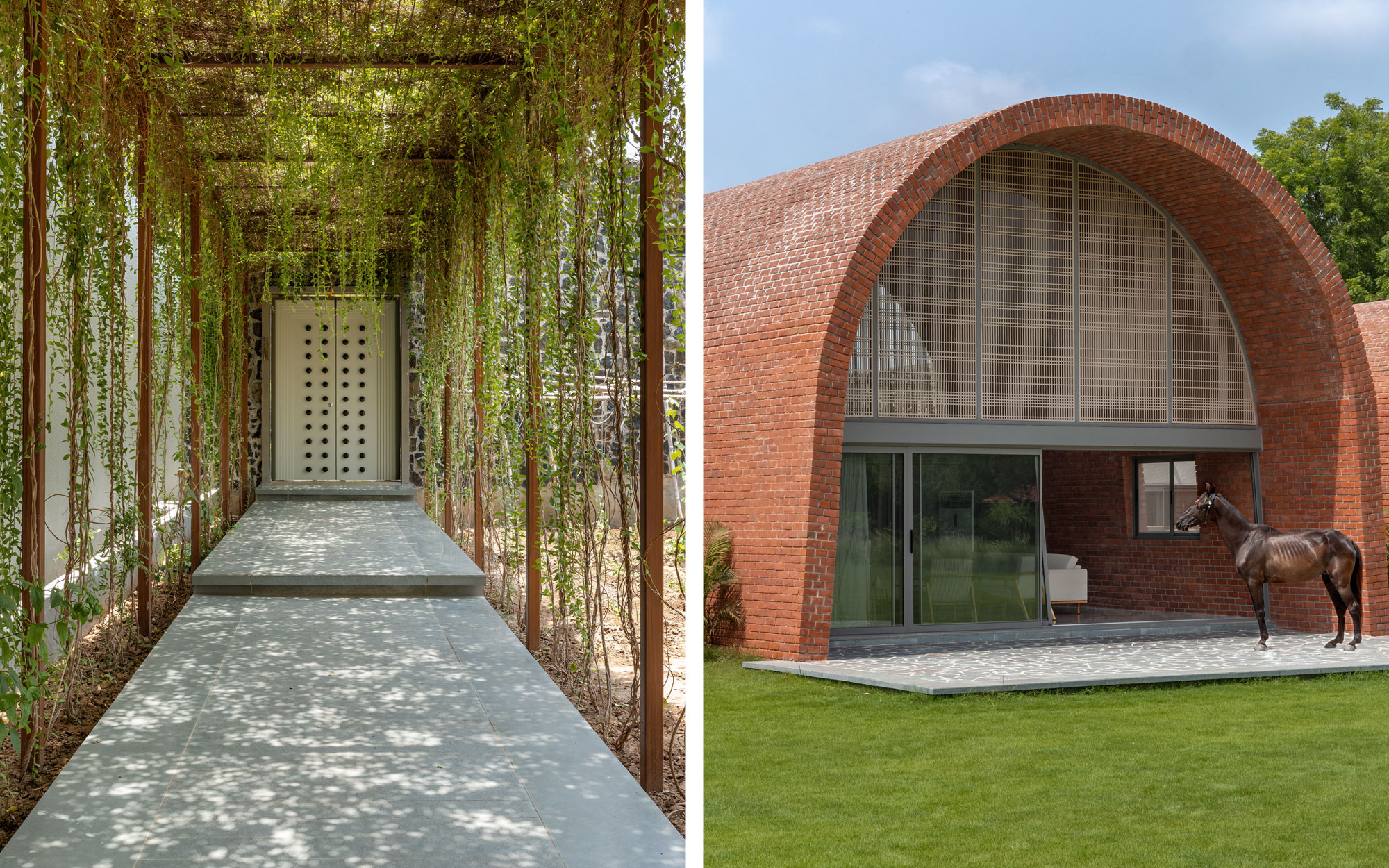
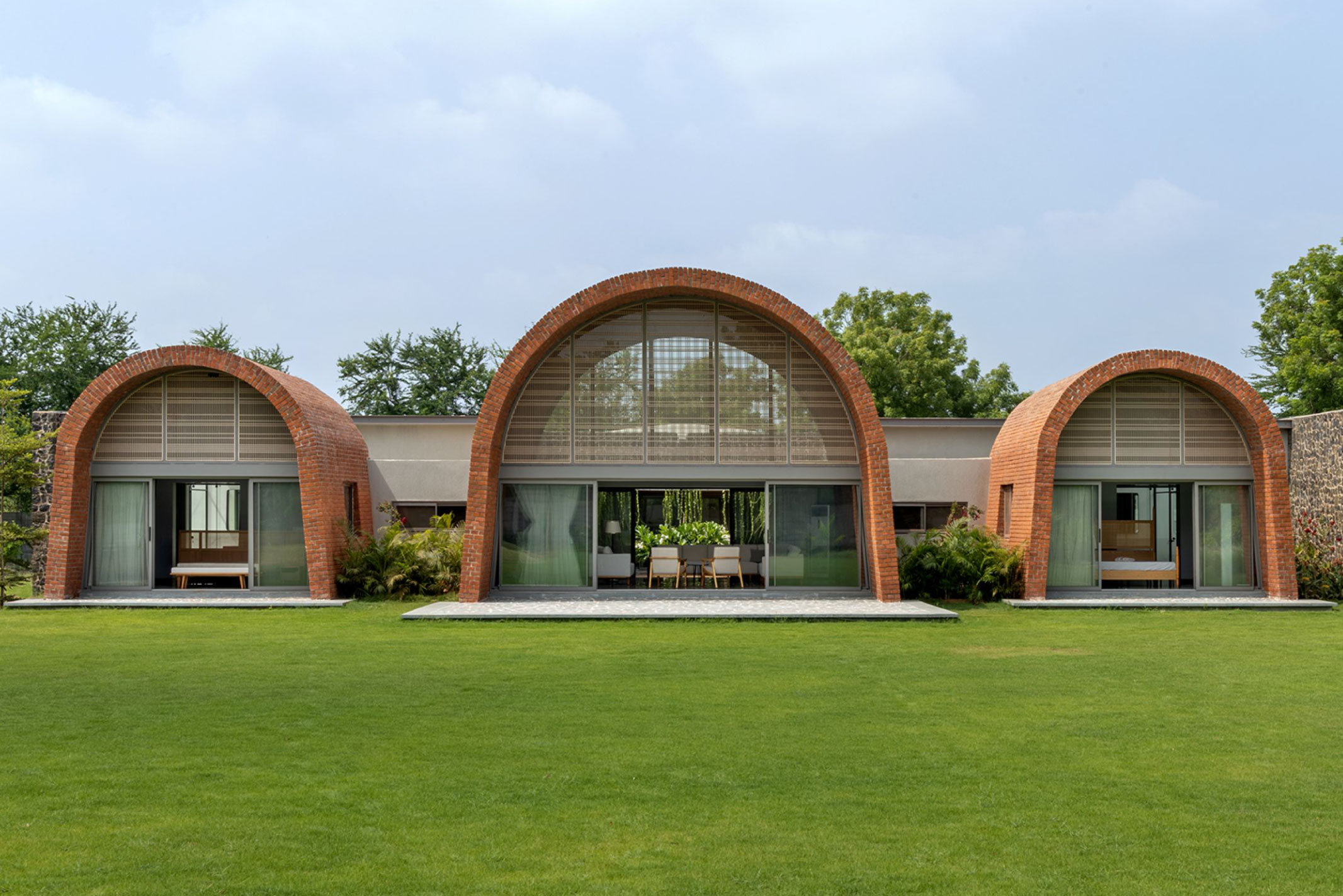
Spanning 6,000 sq ft, the built-up area is modest but ambitious in spirit. Its most striking feature is a 20-foot-tall brick vault, a roof that stands without a single beam, steel rod, or slab. Beneath this vault, the architecture feels both ancient and experimental: authentic in material, timeless in intent.
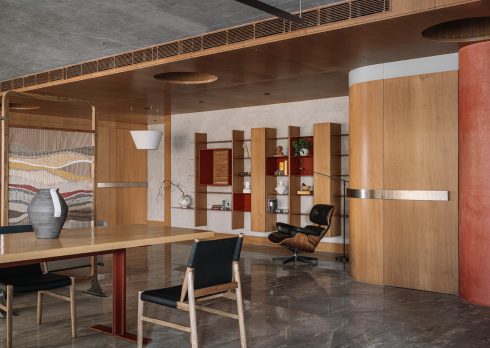
In both philosophy and form, the space stands apart from the traditional notion of luxury. “The design rejects superficial finishes and industrial uniformity, staying true to the emerging trend of slow architecture — a practice defined by craftsmanship, and environmental responsiveness,” notes Shivani. It is evident in the prevailing tactile minimalism — the rawness of exposed brick, the earthiness of rammed walls, the solidity of native stone, the patina of timber — all as aesthetic virtue. From layout to palette, every decision bows to nature’s logic.
Also Read: Stone, Wood, And Nature: A Pune Farmhouse That Blends Craft With Rustic Artistry
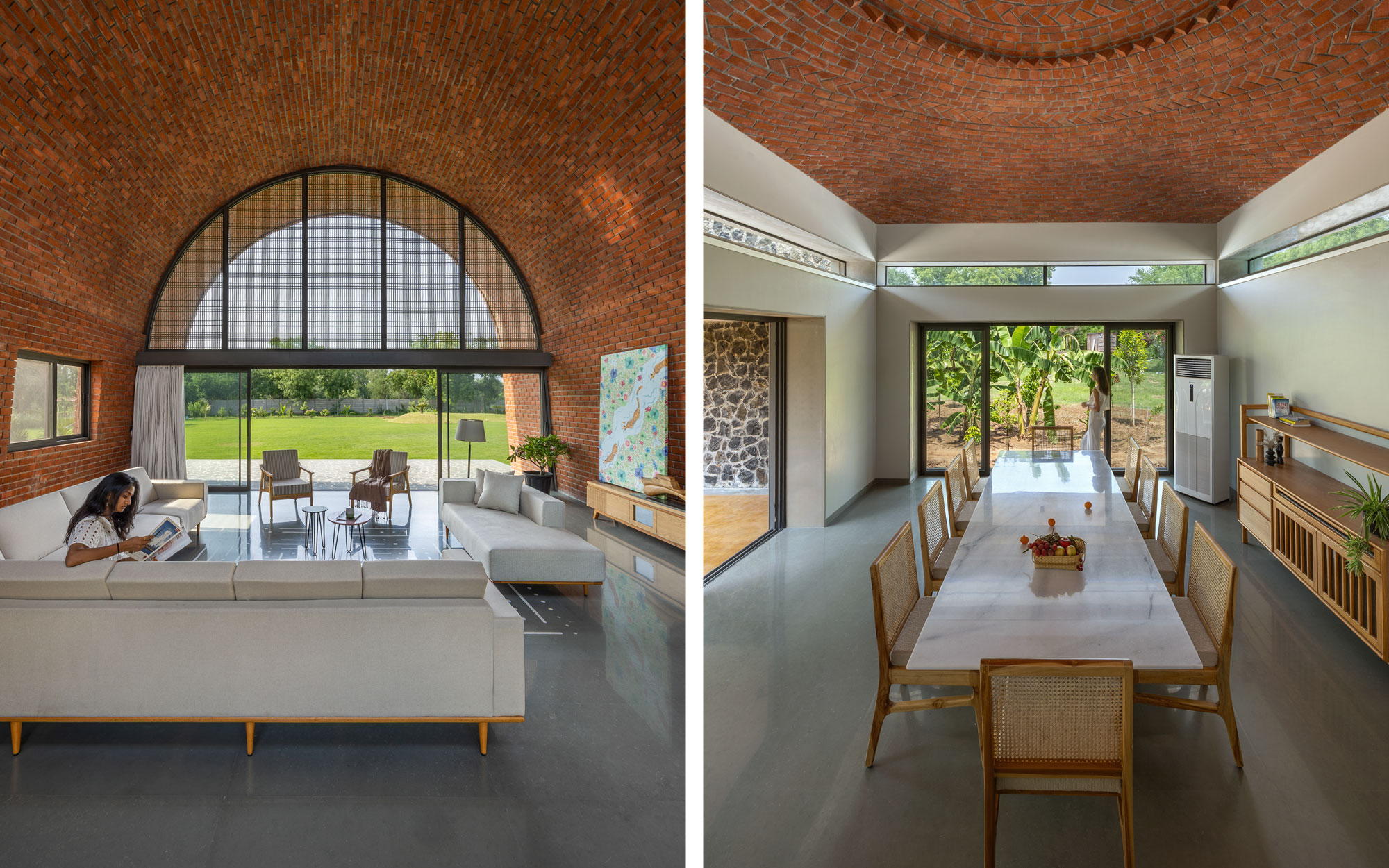
Inside, an earthy spectrum of muted browns, warm beiges, and soft greys blend with the soil and stone outside. Natural light heightens these hues, shifting them through the day — ochre at sunrise, clay at dusk. “Rather than rely on surface contrast or decorative flourish, we sought a balance in texture: smooth against rough, dense against porous, shadow against light”, explains Manav.
The home orients itself around a central courtyard, inspired by the Indian chowk — the open void that acts as a social and climatic core. Around it, the communal, private and circulation spaces flow fluidly, each anchored by views of the orchard and the gentle slopes beyond.
Also Read: This Beautiful 120-Year-Old Villa In Pondicherry Is A Home Away From Home
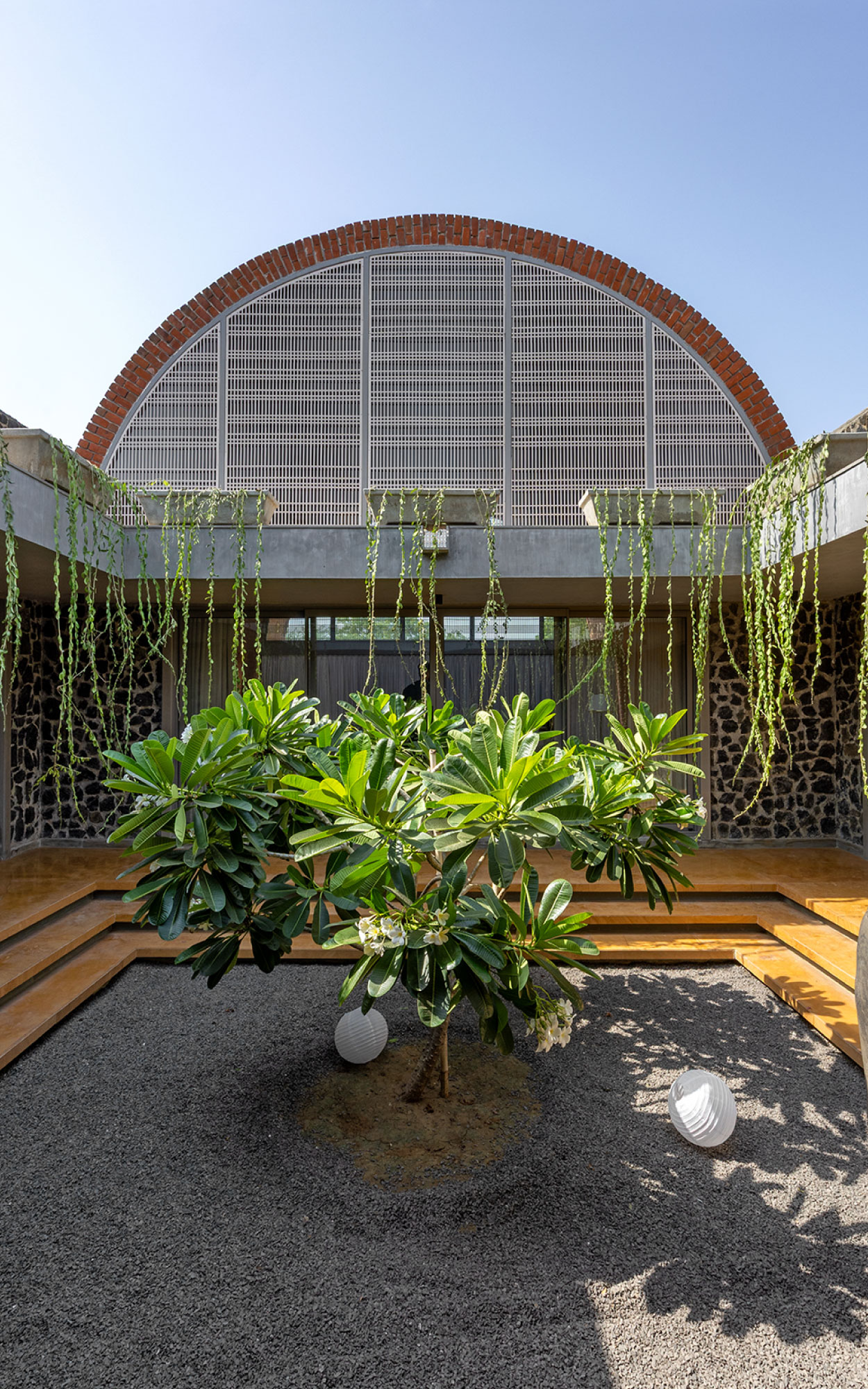
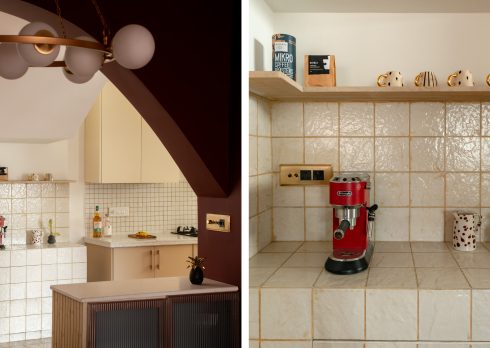
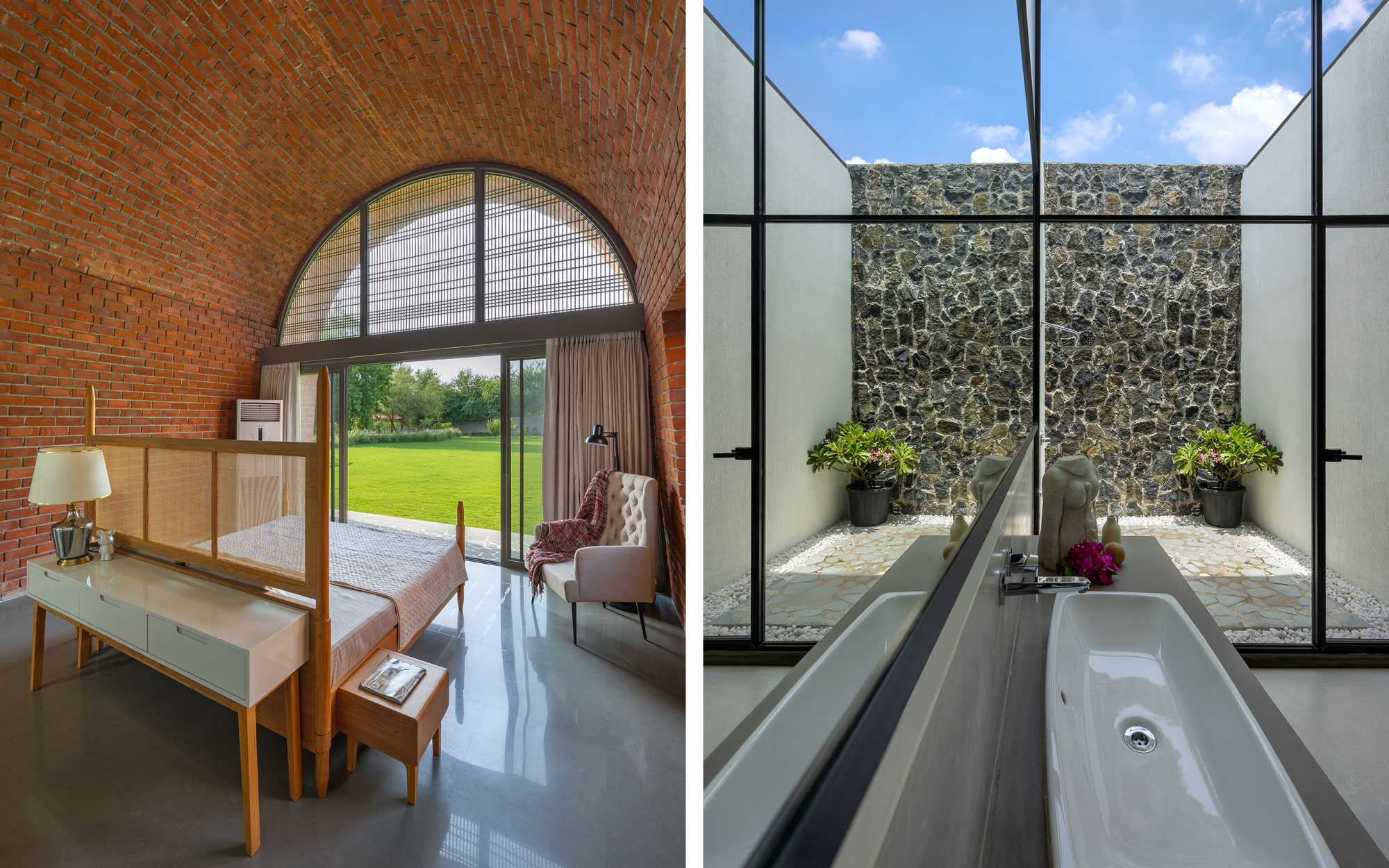
To the southeast lies the kitchen, designed more like a forest café than a utilitarian space. Within the kitchen a window opens to an organic garden where herbs, vegetables, and fruit find their way directly to the stove. The western edge leads into the courtyard, while decks extend from the living and bedroom zones. Further, each bedroom is oriented for privacy, framing curated views of the girdling greens.
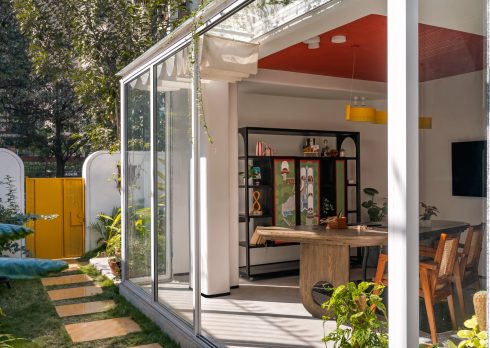
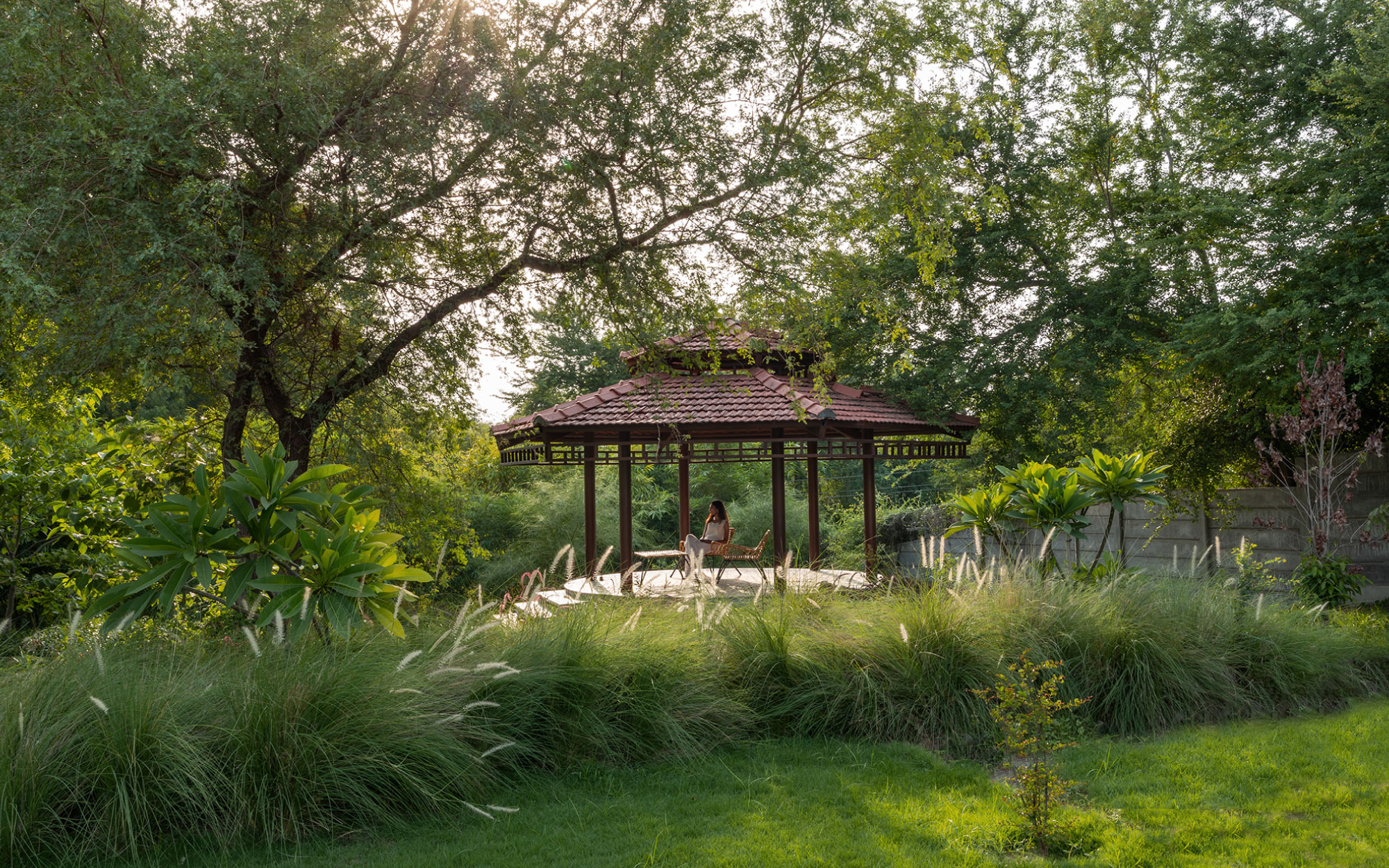
Meandering beyond the built edges, nature extends its claim. A gazebo sits near the orchard, posing as a refuge for hosting or moments of solitude. In response to the couple’s yearning for a trail where kids could cycle through trees, the studio outlined a cycling trail that starts at the north garden, loops by the orchard, hugs the natural slope, and ends at the gazebo.
Also Read: This Restored Gujarat Home Lets You Walk, Lounge, And Stargaze On The Roof
“Conceptualising Vault House was an introspective journey”, contemplate the architect duo. “It deepened our understanding of the balance between tradition and modernity.” In doing so, it joins a growing movement that defines modern Indian architecture not through spectacle but through substance — where climatic comfort and context outlines the new markers of elegance.