Threading Through A Rich History Venjara Carpets Debuts At Design Mumbai 2025
At Design Mumbai, Venjara Carpets transforms rugs into narrative environments, merging hand-knotted heritage with contemporary experimentation, sustainable craft, and a striking Studio Nyn collaboration that bridges past and present.
- 28 Nov '25
- 11:06 am by Simran Almeida

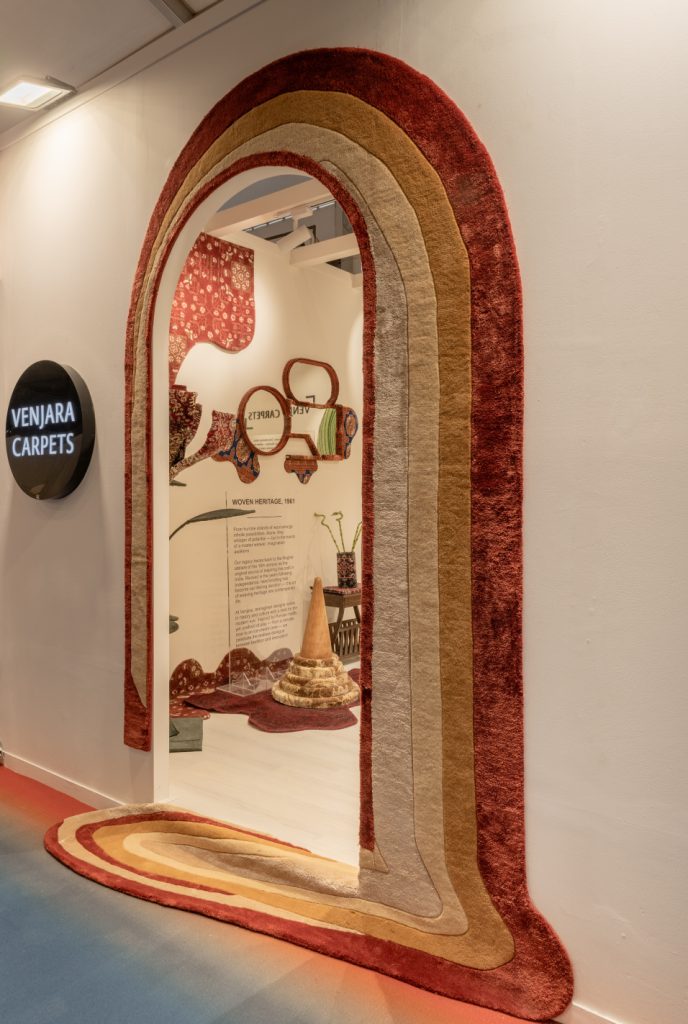
Carpets and their motifs are the newest obsession of artists, curators and the design fraternity. From spreading them across tennis courts and cricket pitches to hanging it like an artwork, carpets have woven their way through the most eccentric landscapes. In keeping with this shifting zeitgeist, Venjara Carpets drapes rugs on the most playful surfaces and corners at its Design Mumbai 2025 debut. Flowing from the wall to the floor, corralling the pendant lights or lounging across the furniture, its rugs transform everyday objects into repositories of heritage. “Rather than presenting products, we wanted to create an experience,” avers Aishaa Nensey, Creative Director of Venjara Carpets.
This immersive booth weaves the brand’s legacy right from its eminence in the artisanal heartland of Bhadohi, India. “Each zone reflects a different chapter in the evolution of textiles and design over the decades, allowing the audience to absorb the story in a way that feels inviting and immersive,” shares Nensey. Tracing an artistic journey spanning over six decades, the booth celebrates the exquisite craft of hand-knotted wool and silk rugs from its inception.
Also Read: 5 Must-See Installations Celebrating Big Ideas In Small Buildings At The Dubai Design Week 2023
Interwoven Stories Of The Patina
Established in 1961, the brand has stood at the vanguard of textile art, emphasising the brilliance of indigenous artisans and their hand-knotted masterpieces. By the 1980s and early 2000s, as hotels began featuring larger lobbies, restaurants, and ballrooms, the brand extended its rugs into India’s growing hospitality and corporate interiors. With the dawn of the contemporary era, these objets had to be reimagined to parlay more than their mere function.
Shouldering this evolution, Aishaa Nensey redefined these tapestries for the contemporary eye, infusing them with the traces of colonial memory, nostalgia, and the far-flung paths across continents. “I realised that a legacy this rich, rooted in heritage and artistry, was not something I could walk away from. It deserved to be preserved, re-imagined and most importantly, carried forward,” shares Nensey. Returning from New York, she was reluctant to join the business until the craft itself began weaving her in. “There was something profoundly moving about witnessing a rug emerge from pure handwork: the textures, the colours, the rhythm of creation and the art,” reminisces Nensey. This encounter altered her perception, ultimately revealing itself as her destined vocation.
Also Read: The Second Chapter: Design Mumbai 2025 Opens Its Doors To Global Vision And Indian Ingenuity
Beyond The Conformist Role
Since helming the brand, she challenged its conformist practices. “I felt compelled to push the boundaries: introducing unexpected shapes, sculptural carving, and rich textural play that offered a modern counterpoint to our heritage,” shares Nensey. In doing so, she blends heritage with innovation, diversifying the design language while underlining the beauty of wabi sabi. “The soul of a craft lives in its imperfections,” reflects Nensey. It was this belief that shaped her approach, in recognising that every anomaly is an imprint of the maker, defying the impetuous expectations of perfection.
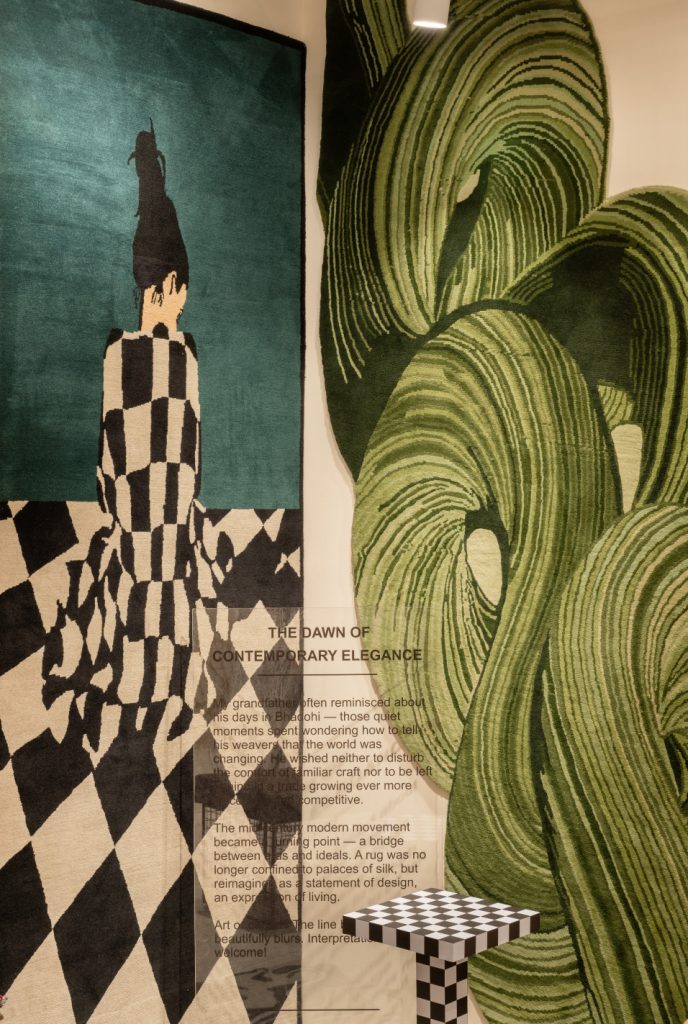
Guided by these principles, the brand’s Design Mumbai debut traced six decades of craft, innovation, and storytelling. Curated by Aashna Anand, Founder of Three Entertainment, the booth reimagined Venjara’s heritage, casting each carpet in a new light that celebrated tradition while embracing contemporary ingenuity. “She came to us with a beautiful vision rooted in traditions, her love for textiles, and a desire to present carpets in a fresh way,” shares Aashna Anand, Founder of Three Entertainment.
Also Read: Neutrals Make A Statement At This Sea-Facing Apartment In Mumbai
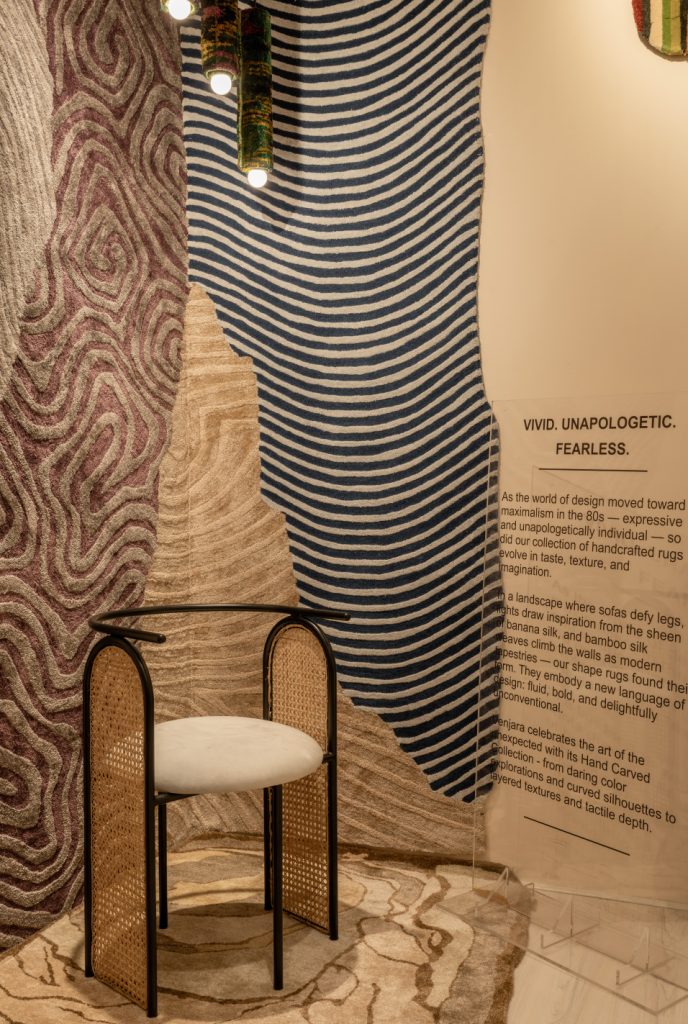
Through Decades Of Craft
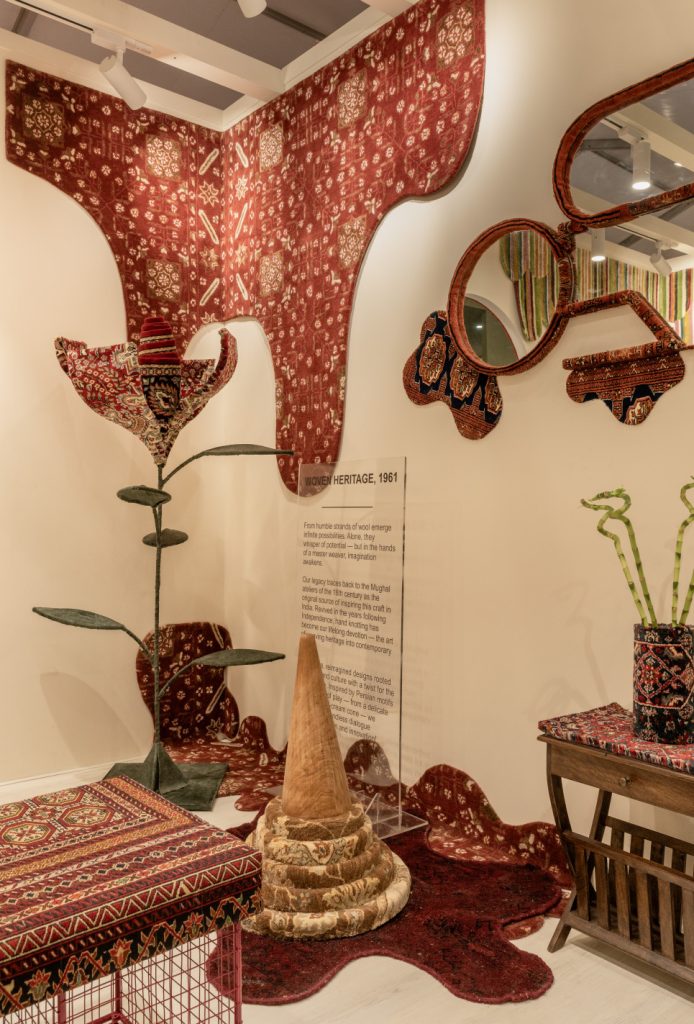
With pieces reflecting subtle imperfections, each rug abandoned the floor entirely, instead reclining across unexpected surfaces. “We approached the space as a narrative — dividing it into distinct zones that guide customers through a thoughtful journey,” shares Nensey. The booth unfolded with ‘Zone 1: Woven Heritage,’ 1961, paying homage to the brand’s origins with hand-knotted rugs flowing across walls, where playful reinterpretations of Persian motifs, like roses and spilled ice-cream cones, were reimagined. While ‘Zone 2: The Dawn of Contemporary Elegance,’ shifted the lens to the Memphis movement, transforming rugs into optical illusions that meld the boundary between function and aesthetics.
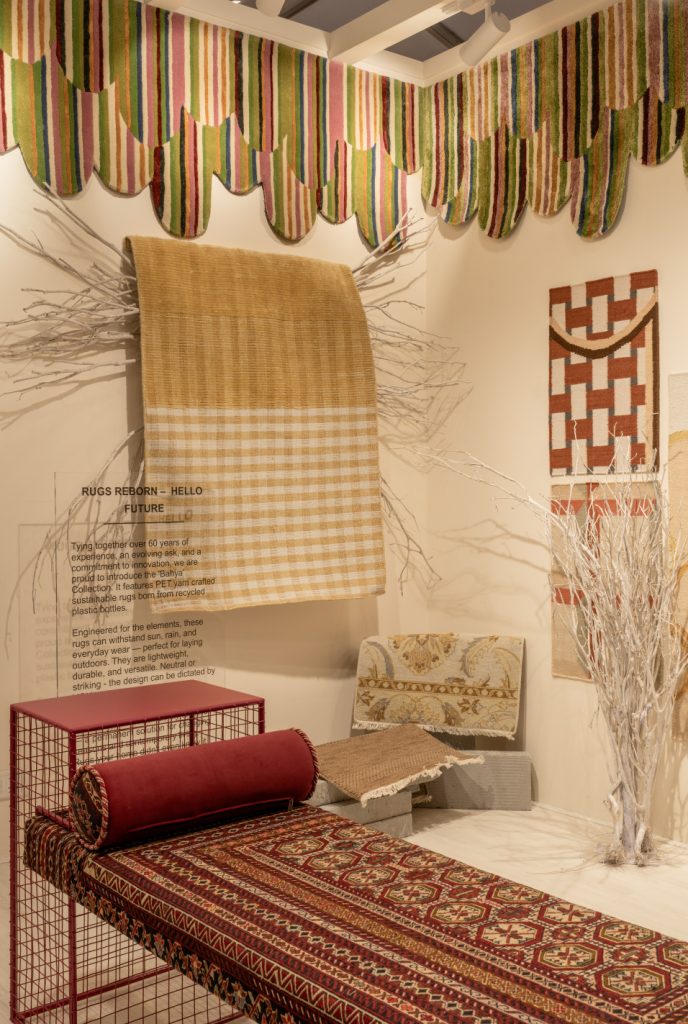
In ‘Zone 3: Vivid. Unapologetic. Fearless,’ maximalism took centre stage through asymmetrical silhouettes, textures, and innovations like banana silk textiles into architectural experiences. The booth’s tale culminated in ‘Zone 4: Rugs Reborn – Hello Future,’ where the sustainable ‘Bahya Collection,’ crafted from recycled PET yarn, is draped on wooden lamps and panels. The pièce de résistance is a diwan in collaboration with Studio Nyn—a Mumbai-based interdisciplinary practice—who reinterpreted an Afghan kilim on the Diwan with a contemporary metal-mesh form, creating a bridge between past and present.
Also Read: 3 Papier-Mâché Treasures, A Craft That Kashmir Won’t Let Fade
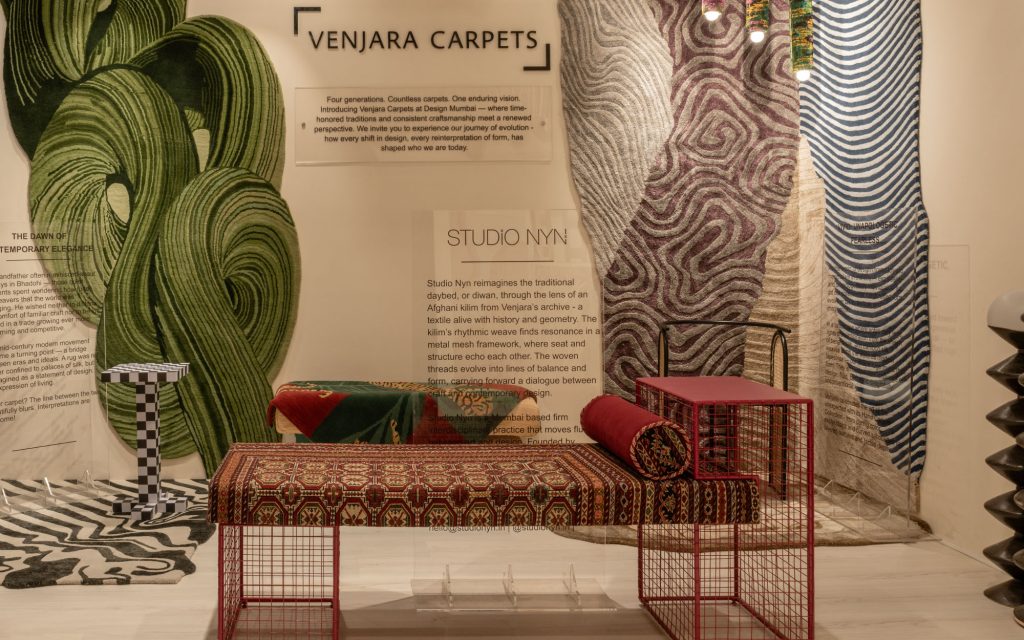
Venjara Carpets’ immersive showcase ultimately reframes the role of rugs in contemporary design, from functional objects to storied works of art. “Its charm is inherent, unrepeatable, and deeply felt. Like art, it finds its way to you,” notes Nensey. Through craft, heritage, and creative reinvention, Venjara reaffirms a belief that carpets can be places of wonder, storytelling, and transformation.