
Mexico’s New Museo Casa Roja Unmasks Frida Kahlo’s Private Life
Restored by David Rockwell, Museo Casa Roja’s terracotta walls and sun-dappled courtyards invite viewers to dwell into spaces where Frida Kahlo once lived, loved, and created.
- 10 Nov '25
- 5:40 pm by Urvi Kothari

Colour has always been fundamental to Mexican painter Frida Kahlo’s visual language as she merged realism, symbolism, and surrealist elements. Married to the muralist Diego Rivera, she frequently depicted herself in traditional Mexican clothing surrounded by symbolic imagery—plants, animals, and religious motifs—to express inner states and to assert her Mexican identity, especially during a time of strong cultural nationalism. She used colour to communicate her Mexican identity, emotional intensity, physical suffering, and personal mythology. It spoke through her canvases, her clothes, and the cobalt-blue hued sanctuary, Casa Azul in Coyoacán. But just three blocks away, another hue narrates some untold stories of Kahlo—the deep terracotta red of Casa Roja, a newly opened museum that once belonged to her sister, Cristina Kahlo. More recently, the property belonged to Mara Romeo Kahlo, Frida’s great-niece, who oversaw its careful preservation before collaborating with the Rockwell Group to transform it into a Pandora’s box unveiling the world of Frida Kahlo.
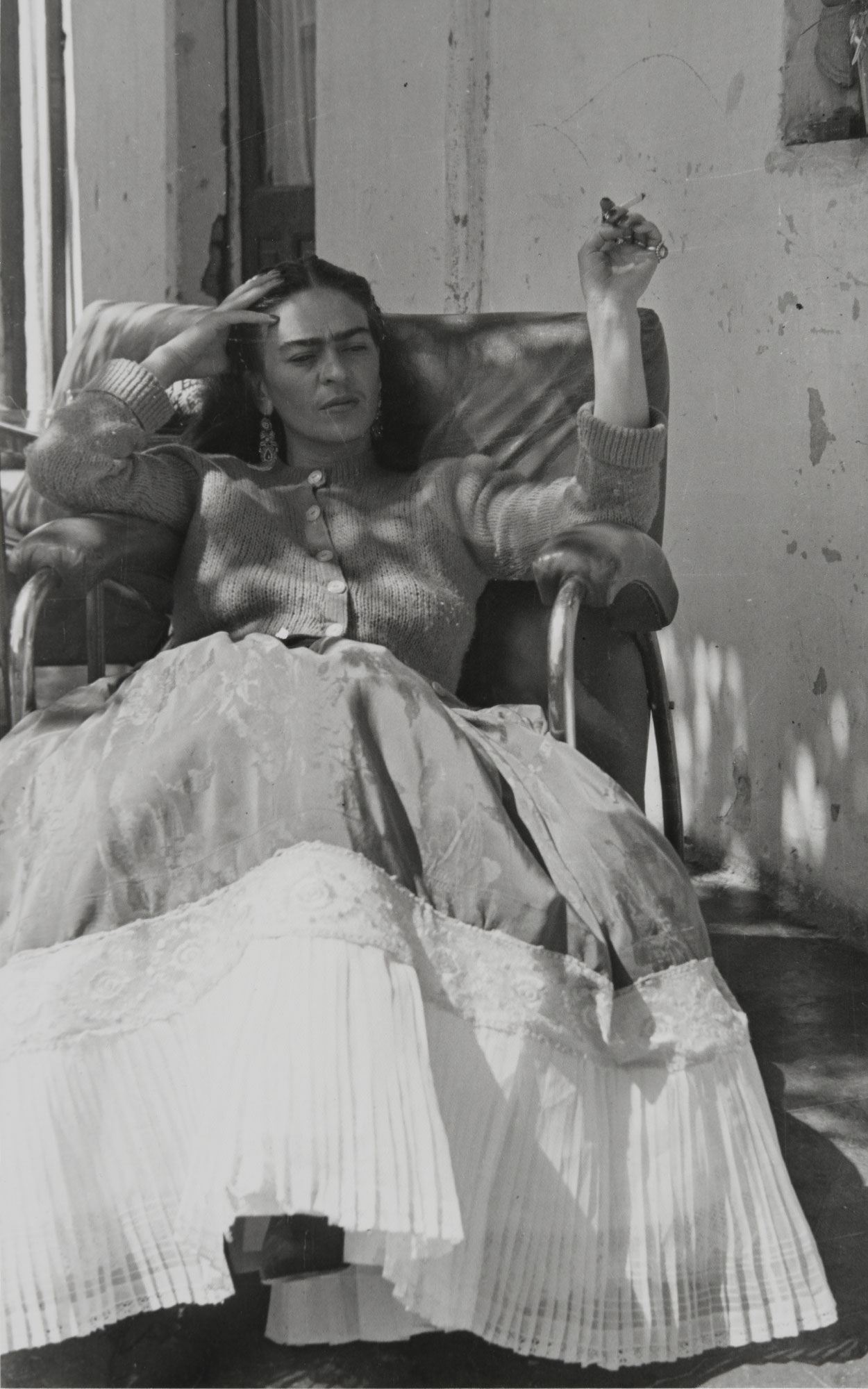
Long before it became a museum, Casa Roja was part of the Kahlo family’s private world. Built in the early 20th century, it was purchased by Guillermo Kahlo, Frida’s father—a photographer whose architectural images shaped much of Mexico’s visual record—as a home for his growing family. In later years, the house was inherited by Cristina Kahlo, Frida’s younger sister and closest companion. Cristina lived here for decades, raising her children and keeping alive the family’s traditions. Frida often visited, finding in its walls a comfort she didn’t always feel in her own tumultuous home. Letters between the sisters describe afternoons spent in this very courtyard—laughter, music, and the exchange of confidences that no self-portrait could ever capture.
Also Read: Art, Tech, & A Bottle Of Coke: In Conversation With Jayesh Sachdev
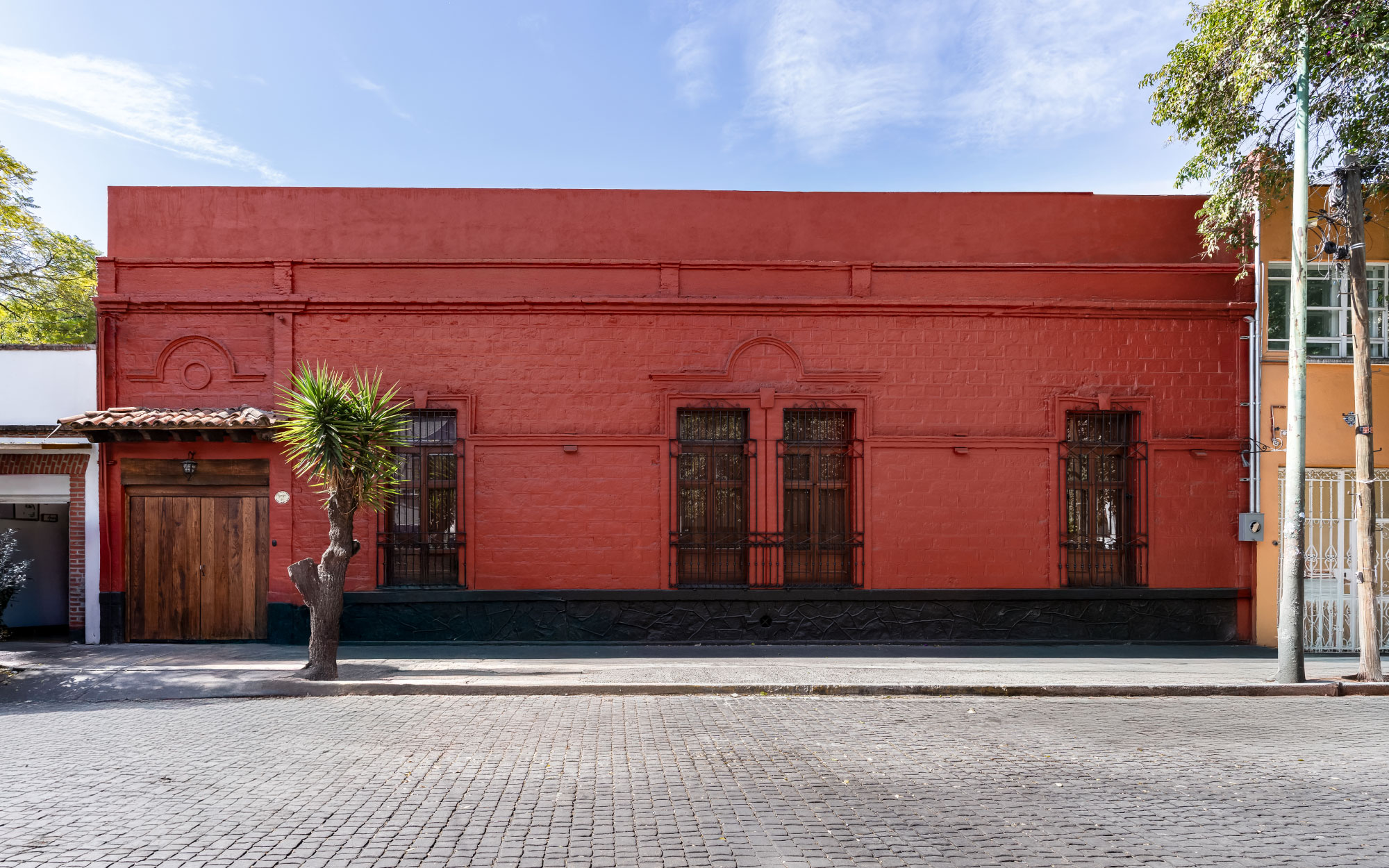
A Home Reborn
The house has been reimagined as a museum. “It was a space where Frida Kahlo felt immediately at ease and completely comfortable to be herself and express herself. We wanted visitors to feel this as well, and be embraced by a welcoming spirit, as if Kahlo herself was inviting them into her home. The fact that the Museo was a functioning home for a real family for so long gave us the perfect opportunity to extend that sense of hospitality. The space could be felt the moment we stepped in the door to begin the project.”, shares David Rockwell, Founder and President, Rockwell Group.
That spirit of intimacy defines every inch of Casa Roja. The house hums with warmth — walls in shades of clay and carmine, sunlight filtering through leafy courtyards, the scent of polished wood and dusted stone. Rather than freezing time, the design allows the house to exhale its history. If Casa Azul is the legend, Casa Roja is the heartbeat. It’s where the myth dissolves into intimacy.
The Architecture of Emotion
Rockwell’s team approached the restoration with sensitivity. Original terracotta tiles remain underfoot, and the palette of reds and ochres pays homage to both the Mexican earth and Kahlo’s bold aesthetic. Every material feels like a dialogue between art and everyday life. “ Museo Casa Kahlo is very much centred around storytelling and hospitality. We are literally welcoming visitors into a family home. In a world of gigantic museums, it’s so refreshing to be part of something realised on such an intimate, human scale.
Also Read: The Eclectic World Of Hormazd Narielwalla
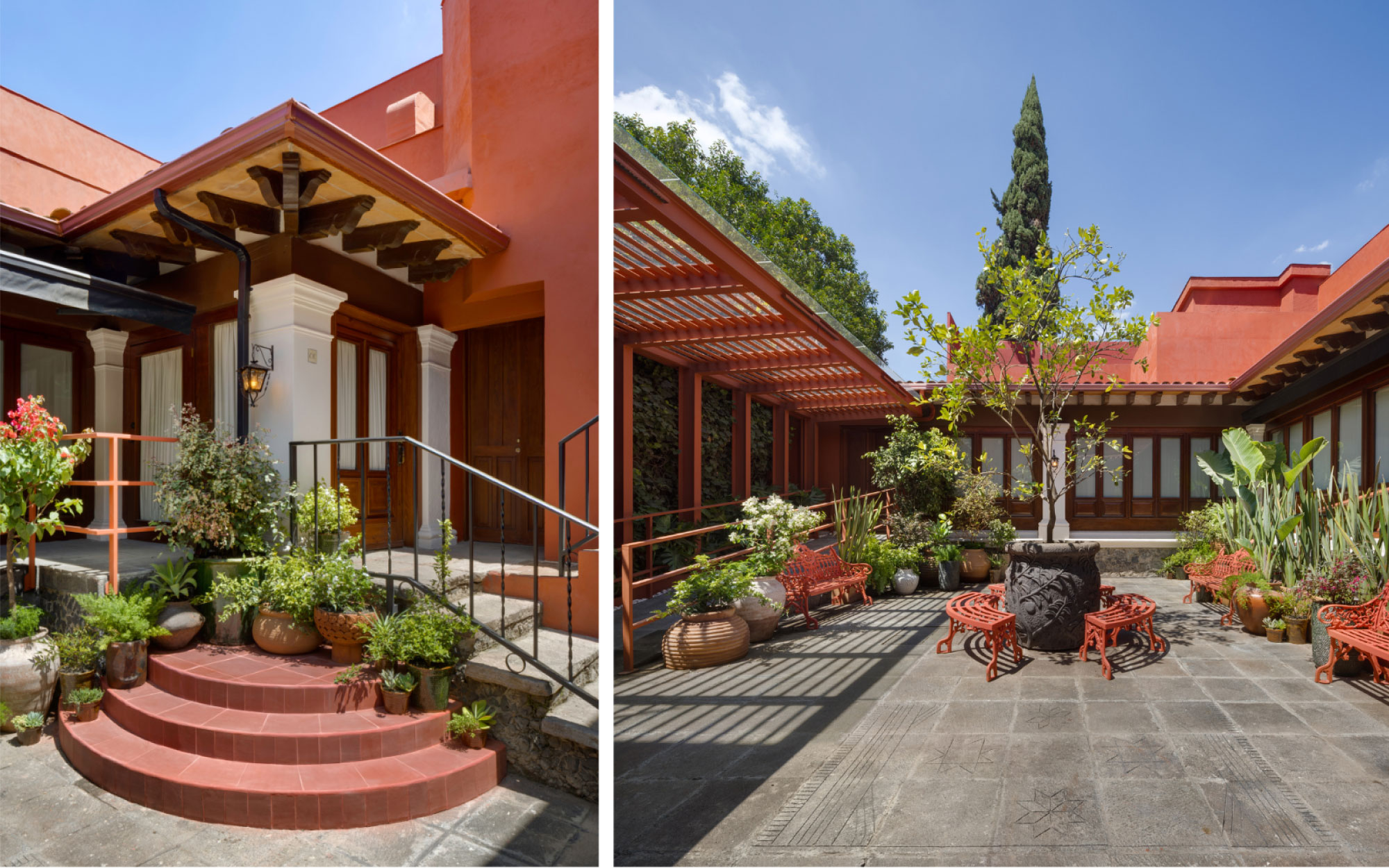
design. (Right) Courtyard. (Image Credit: Rafael Gamo for Rockwell Group)
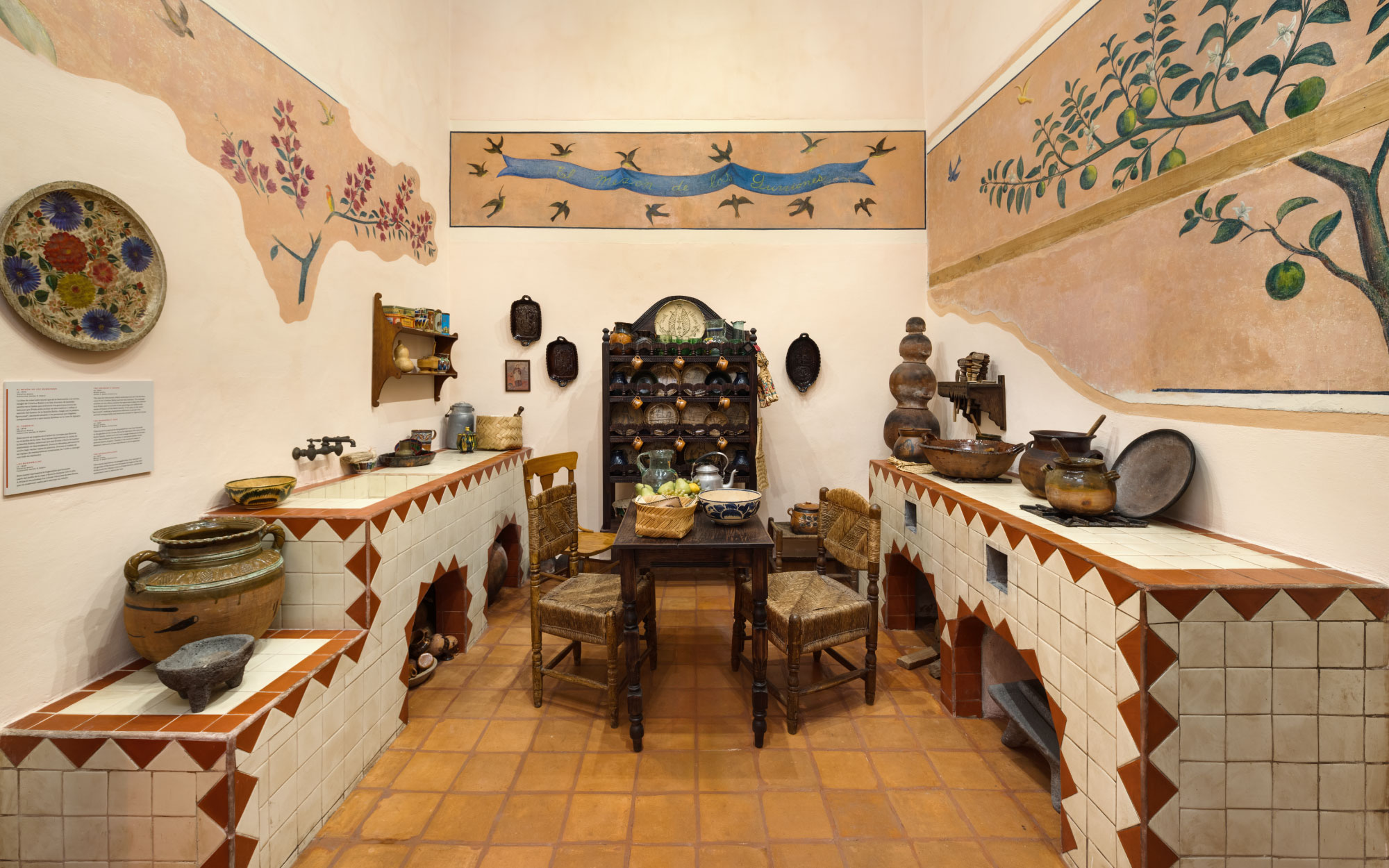
“Every touchpoint for the visitor was crafted to create a narrative of welcome, discovery, and quiet reflection. This includes the courtyard’s reproduced stairs where Frida and her family used to gather for family photos”, shares David. A young grapefruit tree—the subject matter of Frida’s mural in the kitchen—sits in a hand-carved Cantera Stone pot by the famed stone carvers from the town of Escolásticas. In front of the tree, a carving in the stone flooring depicts one of Cristina Kahlo’s personal rugs that used to sit in the entry of the home, welcoming all into the house.
The Unseen Frida
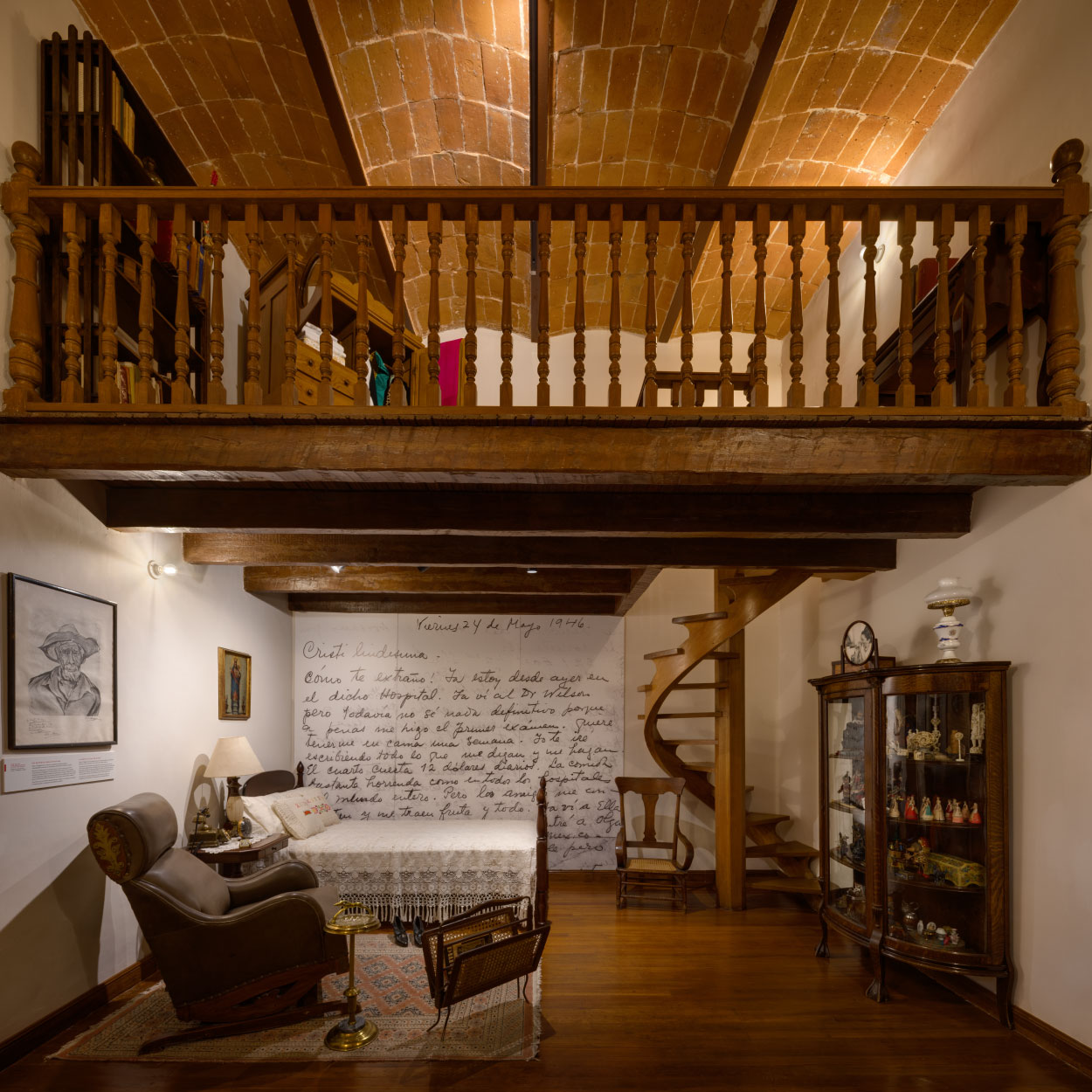
Inside, the curation focuses on the unseen Frida—her handwritten notes, family photographs, childhood embroidery, and even a wall painting believed to be her only surviving mural. These are not grand gestures, but quiet revelations.
Also Read: Three Art Heist Films Based On Real Life Art Thefts
Walking through these rooms, one senses the rhythm of daily life: the scrape of a chair, the murmur of family, the pulse of the past. Perhaps most compelling is her secret subterranean studio space, a small, dimly lit space where Frida would retreat to paint, sketch, and experiment. “We did deep research into historical photographs and the items Frida had in her private retreat. There was only candlelight with no natural light and low-angle walls. We added soft lighting under wood caps, so there’s just a little bit of glow. It gives you the feel of this hidden space when you descend the stairs”, shares Rockwell.
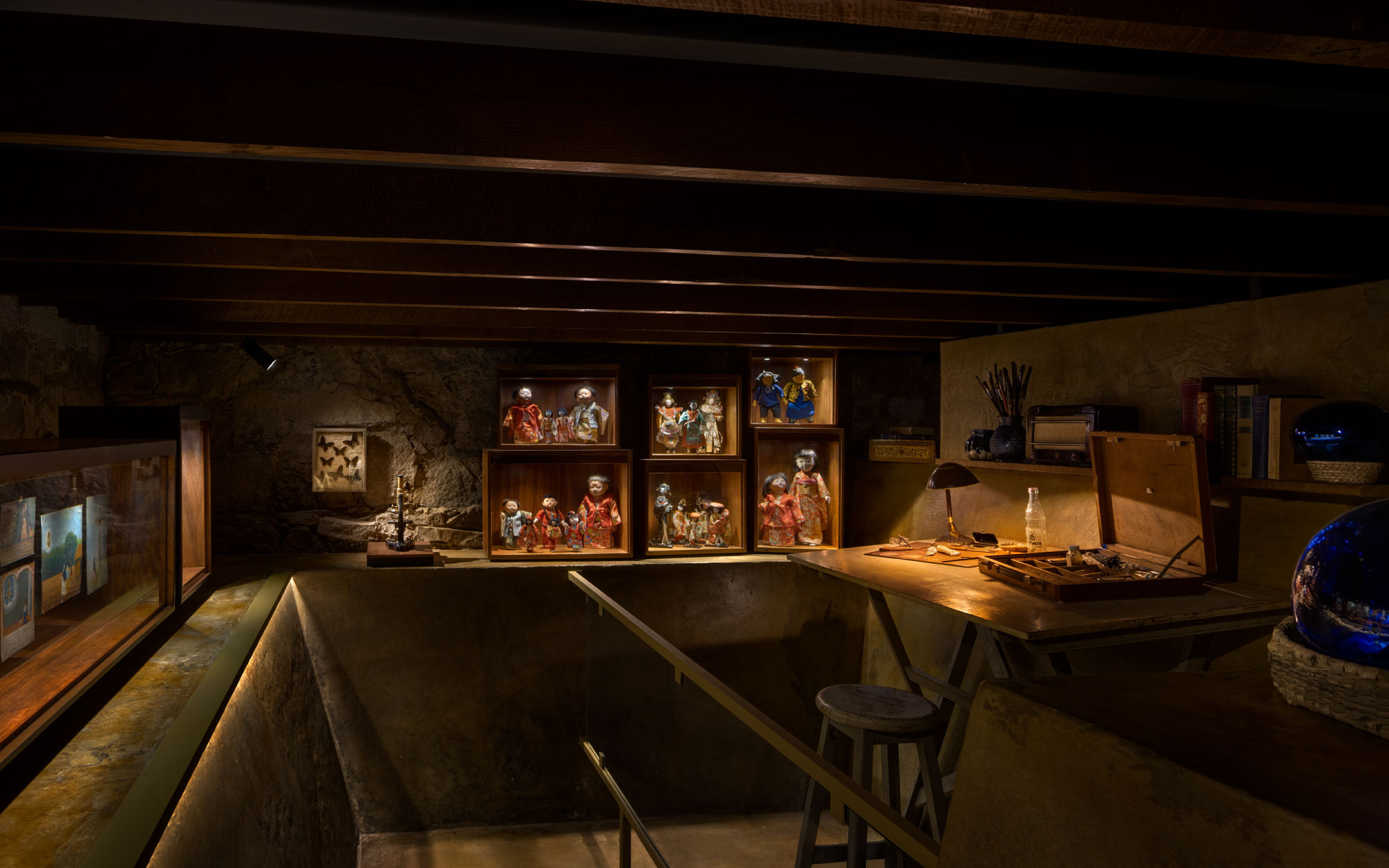
The room houses an eclectic collection of Asian dolls, natural curiosities—butterflies, pressed plants, stones—and the tools of her craft. Each object speaks to her fascination with the natural world and the artistry of other cultures, forming a kind of personal cabinet of curiosities. “There is a collection of objects and family stories told across generations with photographs and replicas of family letters. Her beautiful butterfly collection is also on display. Using original sketches and photographs of the butterflies and insects Frida would study, the LAB at Rockwell Group built an interactive replica of her microscope as a secret easter egg to look into and observe”, he adds.
Also Read: Mattel Teams Up With Milan’s Kartell To Create Chic Barbie Chairs In Signature Pink
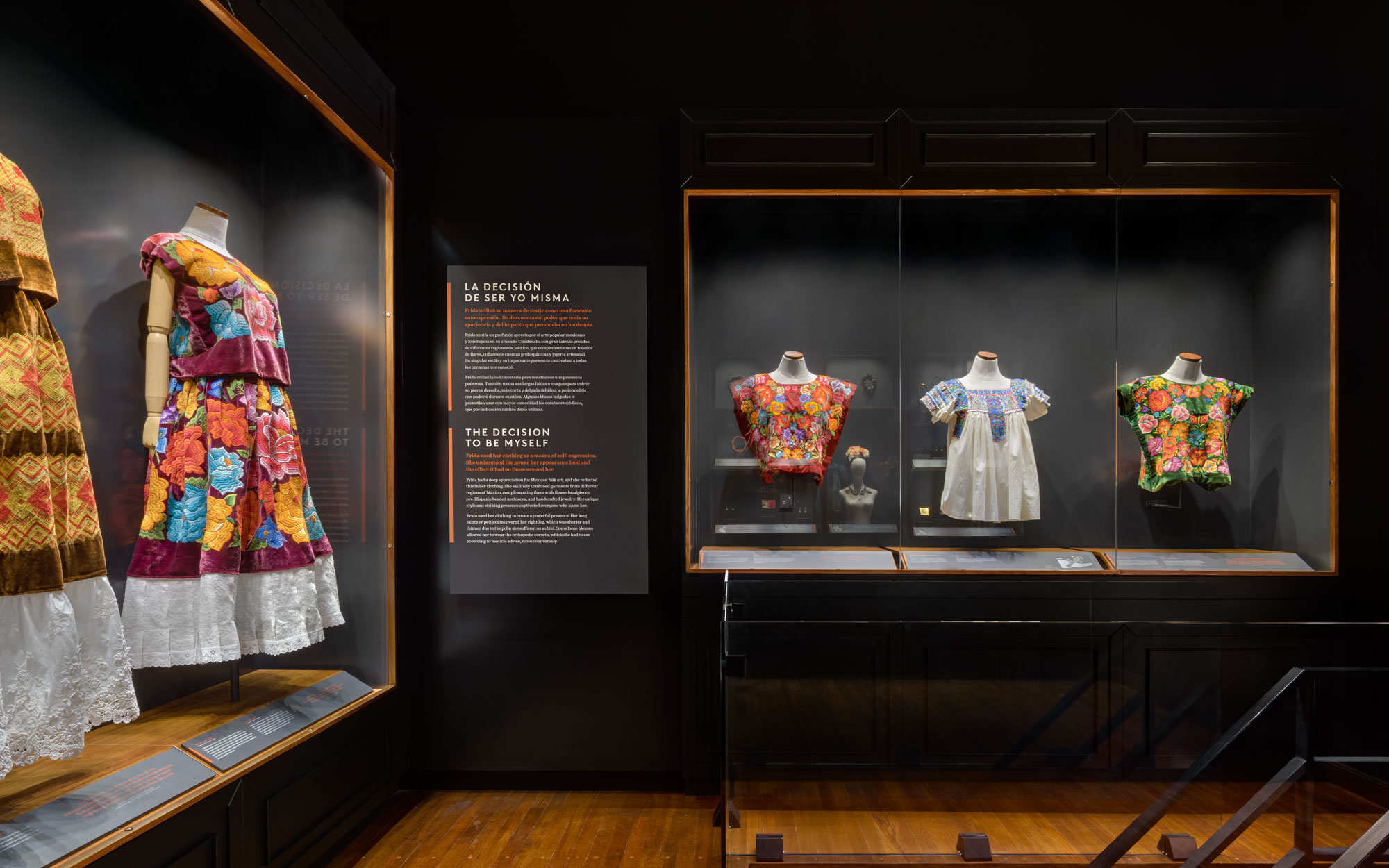
Design as Storytelling
The genius of Rockwell’s intervention lies in restraint. The space has been designed to make the viewers want to pause. The red exterior glows like a lantern at dusk, its colour deepening as the sun descends. Inside, rooms open one into another, connected by a choreography of light and shadow. “Being immersed in Frida’s world reinforced for me how important it is to let emotion and narrative drive spatial experience. Her work is the perfect embodiment of the beauty of imperfection and texture. She allowed the handmade, the symbolic, and the autobiographical to coexist. That sensibility shaped our approach to the museum, where every gesture reflects a dialogue between Frida’s inner life and the physical home that inspired her. It’s something I’m honoured to have been able to witness so intimately and to carry with me”, shares David.
Where Casa Azul celebrates the myth, Casa Roja reclaims the human. It brings us closer not to the icon, but to the woman — the sister, the daughter, the dreamer. In its warmth and restraint, it embodies what David Rockwell calls “a sense of hospitality”, a feeling that Frida herself might still be inside, preparing tea for her guests.