
Marking Her Debut At Frieze 2025, Anju Dodiya’s Paintings Fetch $50,000 Each
Anju Dodiya’s debut at Frieze London marked a major step in her expanding international presence, with Vadehra Art Gallery selling three of her paintings.
- 28 Oct '25
- 3:33 pm by Manisha AR

Earlier this year, Anju Dodiya made her debut at Frieze London, marking a significant step in expanding her international presence. Vadehra Art Gallery sold three paintings by the renowned Mumbai-based contemporary artist for $50,000 (₹43.86 lakh) each. With a distinguished career that includes numerous gallery exhibitions and appearances at the Venice Biennale and Kochi-Muziris Biennale, her work is also featured in major public and private collections, including the Art Institute of Chicago and Tate Modern.
Amid growing concerns over a slowing art market and a wave of gallery closures earlier this year — including Gagosian in London, Almine Rech in Mayfair, and several others across the UK and US — industry insiders cite economic uncertainty, market fatigue, and a shifting collector demographic as key factors. Yet, despite the downturn, notable sales offered a glimmer of optimism: René Magritte’s ‘Le domaine enchanté’ (1953) sold for $1.6 million (₹14.05 crore), while Indian galleries such as Nature Morte and DAG reported strong results, including Subodh Gupta’s painting at $233,210 (₹2.04 crore) and multiple works by Sultan Ali and Jamini Roy.
Also read: The Ultimate Gallery Guide To Mumbai: 10 Must-Visit Art Spaces In Mumbai
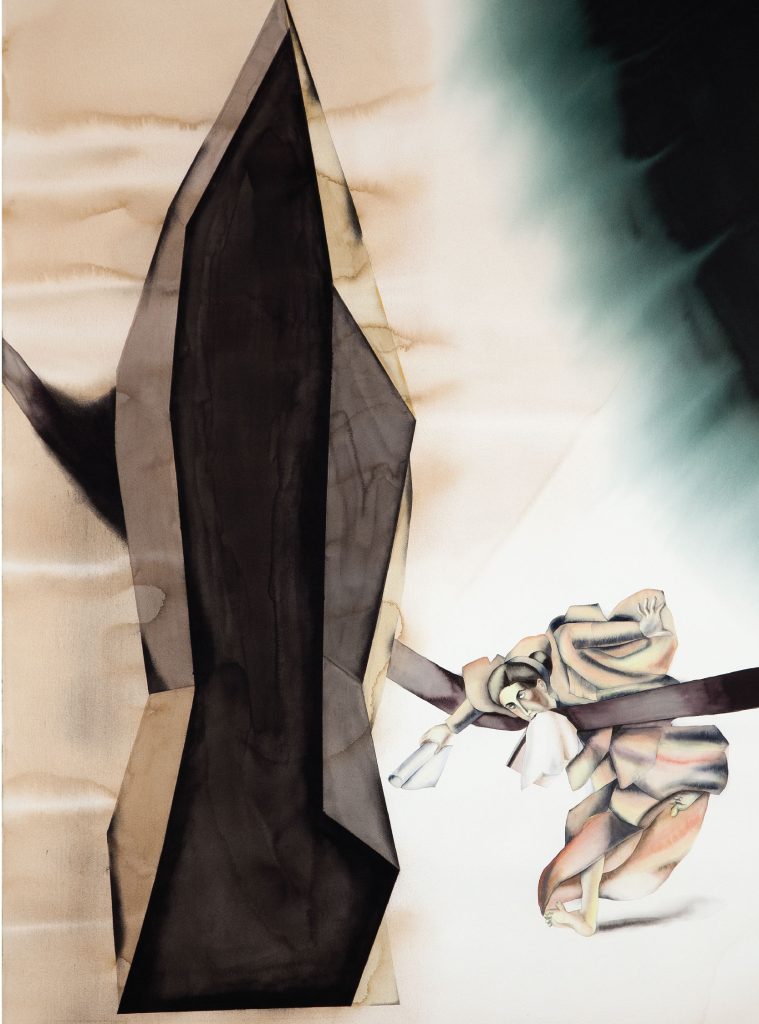
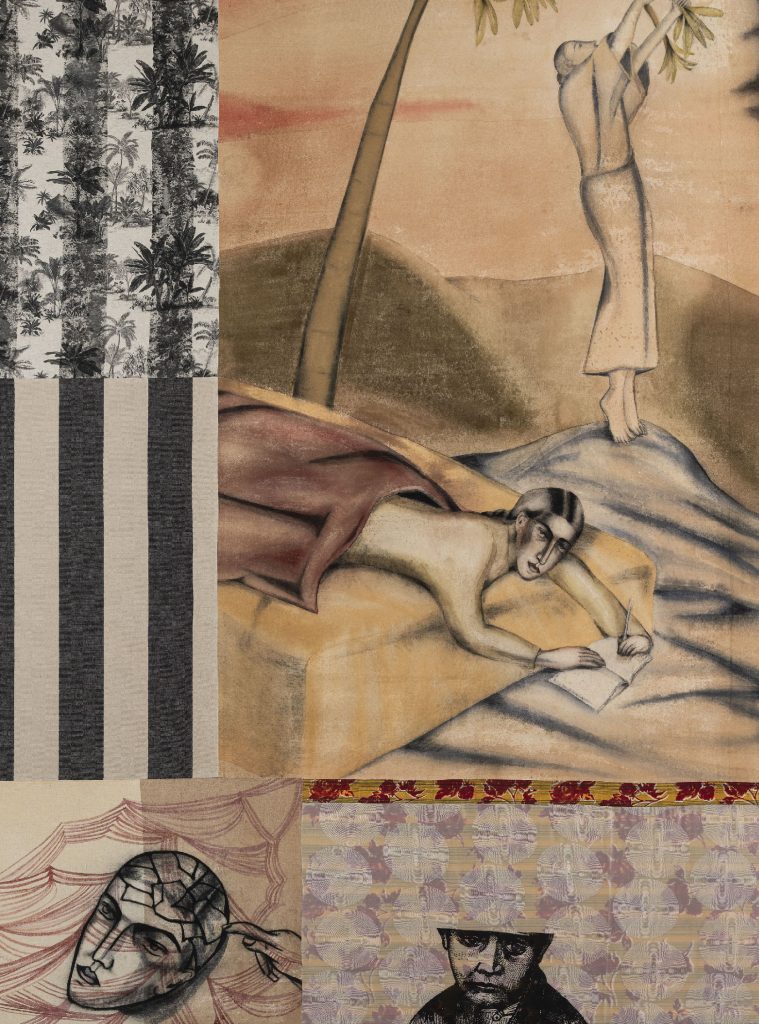
Akin to the sharp edges of woodcut carvings, many of the figures in Anju Dodiya’s work are in motion—whether it’s a floating head in ‘Orchard Notes’ (2025) or two faces confronting each other amid a gust of wind scattering papers in ‘Paper Storm’ (2025). In conversation with British painter Anne Rothenstein, Dodiya describes her fascination with Japanese ukiyo-e woodblock prints, which developed long after her initial encounter with painting. While both artists depict enigmatic scenes of contemplative figures, their obsessions differ. As part of Studio at Frieze Masters, curated by Sheena Wagstaff, they are two of six selected artists bridging historical and contemporary art.
Their dialogue highlights how profoundly Western art has been—and continues to be—influenced by Japanese art, and vice versa, revealing global connections often overlooked in art history lessons. As institutions and private stakeholders rethink the structures and communities that shape the contemporary art world, artists who explore
interconnected narratives are gradually moving beyond niche audiences and gaining visibility on broader platforms.
Also read: 5 New Galleries Making Their Debut At PAD London 2025
Dodiya presents ‘Ancestral Log’ with Vadehra Art Gallery, showcasing large-scale paintings, small drawings, and mixed-media works on paper and fabric — spanning the beginning of her career, works inspired by her studio and more current works. Inspired by Early Renaissance artists, pop culture, films, fashion magazines, Japanese woodblock prints and Medieval French tapestries, her works for Frieze build on the idea of the studio as an ongoing logbook. Among the works that were sold is a piece titled ‘Paper Storm’ (2010) that juxtaposes dark charcoal drawings with watercolour and soft pastels on paper. Described as fictional autobiographies, her work captures inner turmoil and conflict—papers swirl like a halo around a framed face, while a figure lunges at it with a pencil. To the untrained eye, it might simply evoke the daily struggles of a studio artist. But for those familiar with Dodiya’s practice, these charged, evocative emotions are a recurring thread in her visual language.
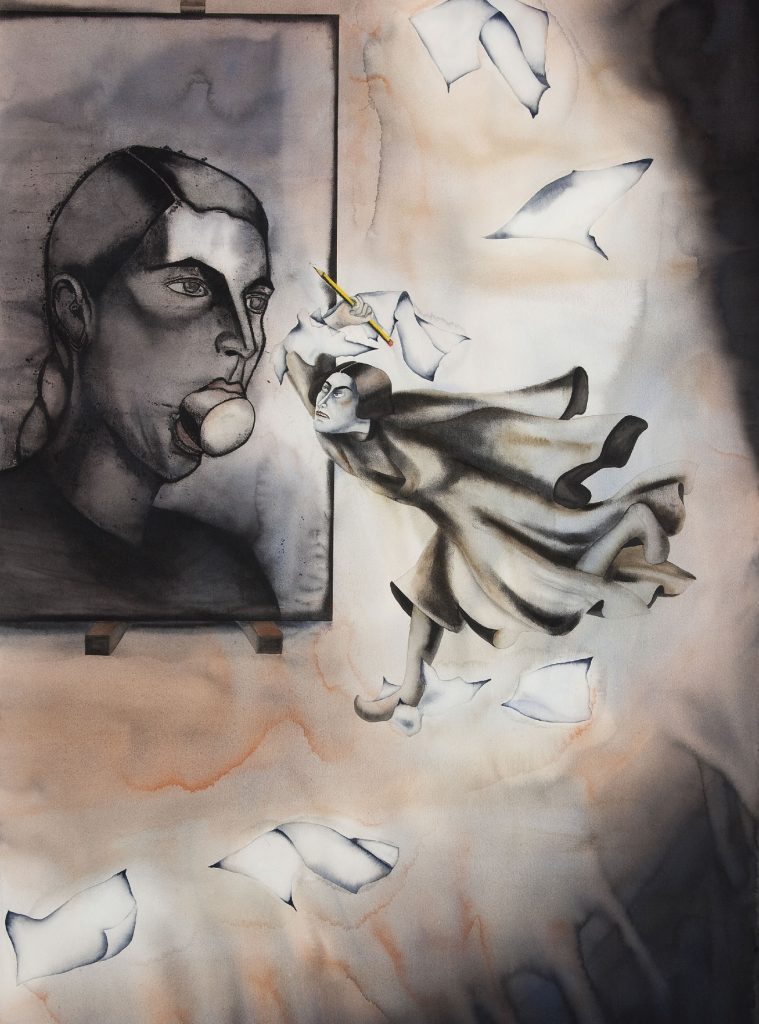
on paper, 73 x 45 inches (Image credits: Vadehra Art Gallery)
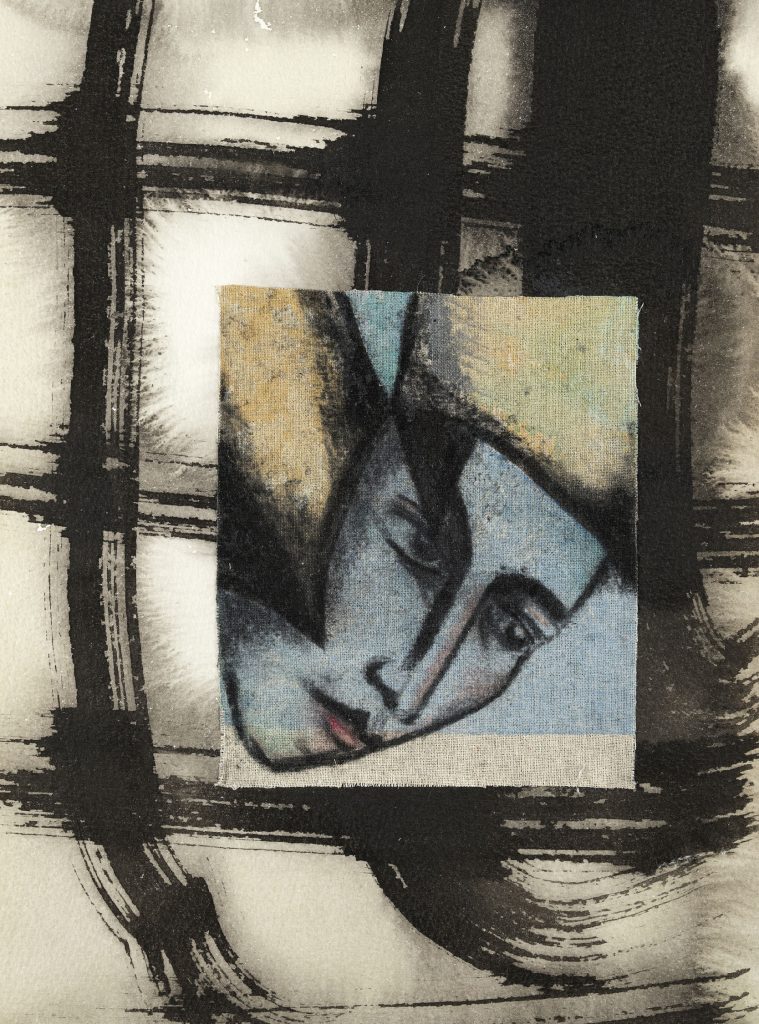
In 2005, nearly a decade into her career as a painter, Dodiya began incorporating mattresses, patterns, and lines from sofas and beds into her work. This introduced a new layer to her otherwise flat renderings of an active inner world. Her protagonists are often captured mid-emotion, or on the cusp of a shift, as if held hostage by thought and rumination. Two other works, ‘Studio Fragment 11’ (2020–2024) and ‘Orchard Notes (2025),’ were also sold at the fair. Representing two distinct periods, the former presents an almost mythical figure framed against a checkered background, while the latter is a visually richer, busier canvas, juxtaposing four different figures—or states of mind—against varied textures and settings.
Mythical women from Greek history, such as Daphne and Penelope, frequently appear in Dodiya’s work, adding layers that explore the psyche of an artist, particularly women in creative spaces. Through these fictional portraits, she captures emotion and feminine desire without reducing her work to gendered narratives or conclusive interpretations. Rather than making grand statements, her paintings create spaces for introspection, leaving meaning open-ended.
Also read: 5 Indian Artists At The Berlin Biennale 2025 Who Are Redefining Contemporary Art
Before her exhibition at Frieze in 2022, Dodiya presented a solo show titled ‘Anatomy of a Flame’ with Vadehra at No. 9, Cork Street, Frieze’s permanent space for international galleries. The show included works developed over two years, combining watercolours, photo-collages, and painted mattresses. Reflecting on her current studio practice in conversation with Frieze, she recalls the various spaces she has worked in, including her family dining table. “Now, as I work, I see trees, a school, and the traffic of silent monks at the old Jain monastery. I ignore the cacophony of Mumbai. However, the unease of this city is deeply embedded within,” she shares.
Dodiya confronts the weight of daily life with the focus and discipline of a trained martial artist, approaching each painting with rigorous obsession. She chisels away at her work as though it were a matter of life and death, transforming the ordinary into a meditation on presence, emotion, and the layered inner world she so vividly portrays.