
At Jia Curated 2025: 5 Stellar Highlights Exploring The Intersection Of Craft, Design, And Culture
Jia Curated 2025 redefines the very idea of design—no longer confined to serving people alone, but extending to landscapes and larger ecosystems.
- 24 Sep '25
- 4:48 pm by Satarupa Datta

For the global design set, Bali has always been a magnetic escape, where traditional Balinese architecture meets a new wave of villas and bungalows that pair vernacular roots with innovative design and in doing so, forge ties between Indonesia’s thriving craft industry and a talented generation of creatives. And 2025 marks a turning point for the island: a year when art and design curators are shaping festivals that aim to place Indonesia firmly on the map of global creativity. Among them, Jia Curated 2025 in August stood apart — a design festival staged within a jungle-clad landscape of graffiti-splashed ruins, popularly known as Bali Festival Park. Across this surreal setting unfolded the five-day programme from August 14th to 18th that moved well beyond the format of a traditional trade show, weaving together design and architecture with art, craft, music, and performance.
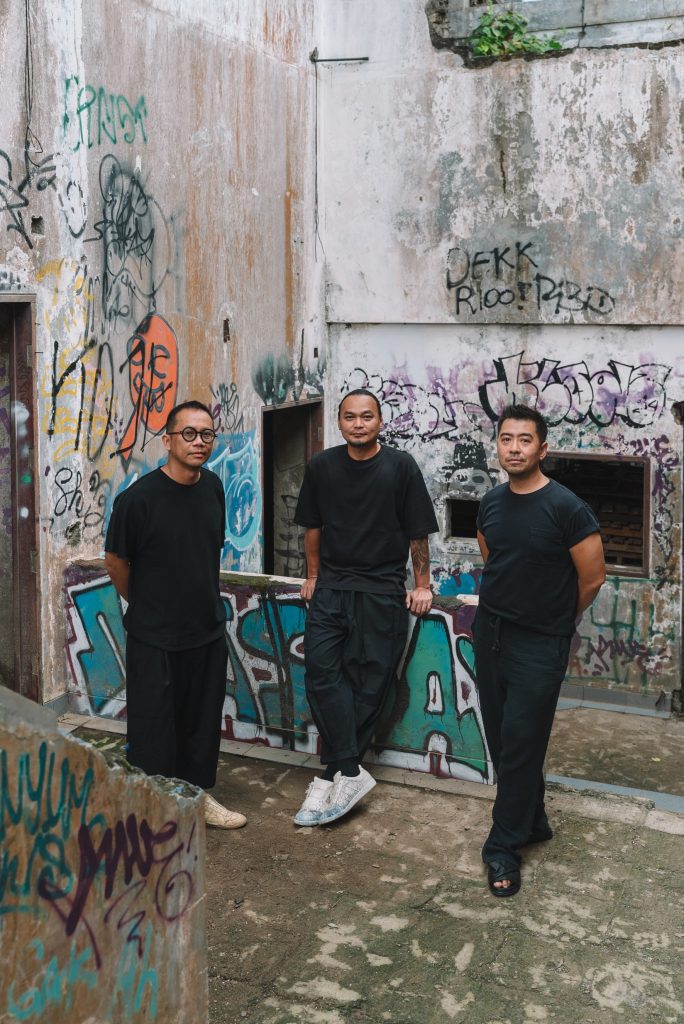
This year’s theme, ‘Evolving Perspectives’, invited visitors to reimagine the ways in which design connects with place, people, and purpose. Building on the momentum of its debut, the 2025 edition expanded to twice its original scale, unveiling a richer roster of international talents, emerging makers, and immersive showcases. Established in 2022 by designer—maker Budiman Ong, the visionary behind his eponymous lighting brand, together Rudi Winata and Yang Yang Hartono, Jia Curated has swiftly become a platform for bold, experience-driven design. “We tell our exhibitors to create experiences,” Ong notes. “It’s not about shopping or pricing; it’s about revealing the essence of your brand and the story behind it.” Amid graffiti-splashed ruins and meandering, overgrown pathways, the dialogue between nature and materiality resonated with striking intensity. The annual event has only grown bigger, seeing a footfall of 12000 visitors in 2025.
Exhibitors were challenged to build pavilions that minimised waste—embracing natural or recycled materials and adopting a design-for-disassembly approach. From among them, we at Design Pataki selected the standout product designs and pavilions that most powerfully amplified the sustainability ethos, while staying true to the craft and design oeuvre that defines Jia Curated.
Also Read: Design Shanghai 2025 Champions Human-Centric Design At Its 12th Edition
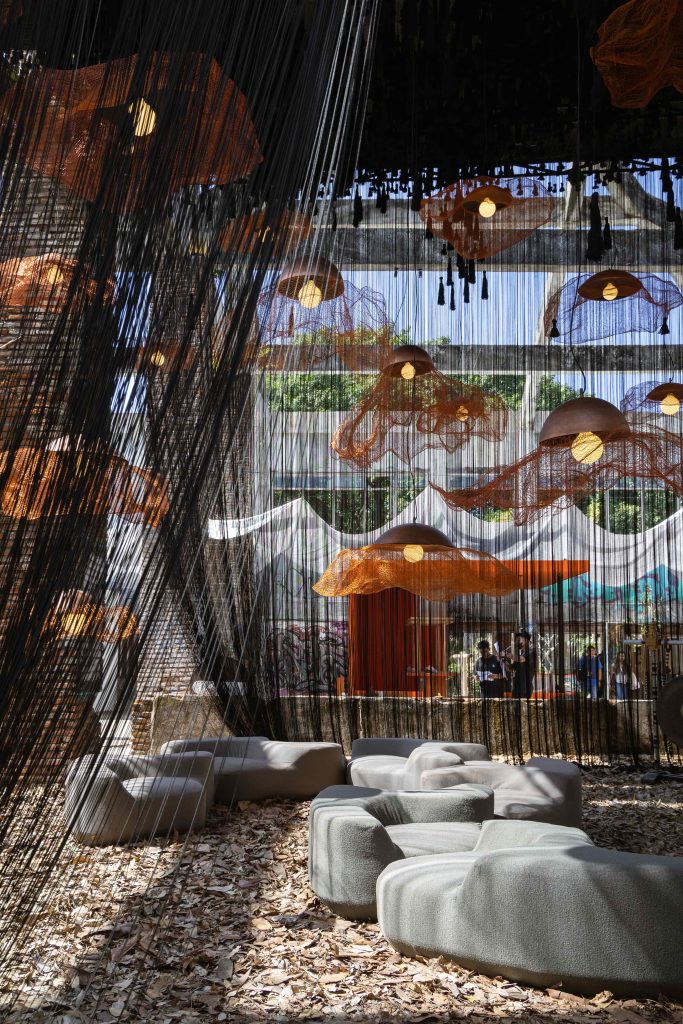
(Image Credit: Indra Wiras)
1. Jamur Collection By ONG CEN KUANG Mimics Nature’s Creativity
Lighting atelier Ong Cen Kuang, founded by designer Ong, unveiled its new ‘Jamur’ collection with a striking installation titled ‘Siklus’ (Cycles), inspired by nature’s eternal rhythms. The space was transformed into an evocative landscape where autumn leaves covered the floor, while visitors wandered beneath a canopy of Jamur (the Balinese word for mushrooms) sprouting from the ceiling, surrounded by countless spores. The ‘Jamur’ collection embodies the quiet poetry of organic growth, where mushrooms emerge from the humblest of beginnings. Each pendant light is meticulously handcrafted in copper, available in two distinct silhouettes and a range of sizes. The pieces are realised through two artisanal techniques—hand-hammered copper sheet and hand-woven copper wire—offering textural depth and sculptural presence. Whether displayed as a singular statement, paired in harmony, or clustered in dramatic groups, the ‘Jamur’ collection transcends its function as lighting. It becomes a radiant centerpiece, a conversation catalyst, and a refined layer of artisanal character within any interior.
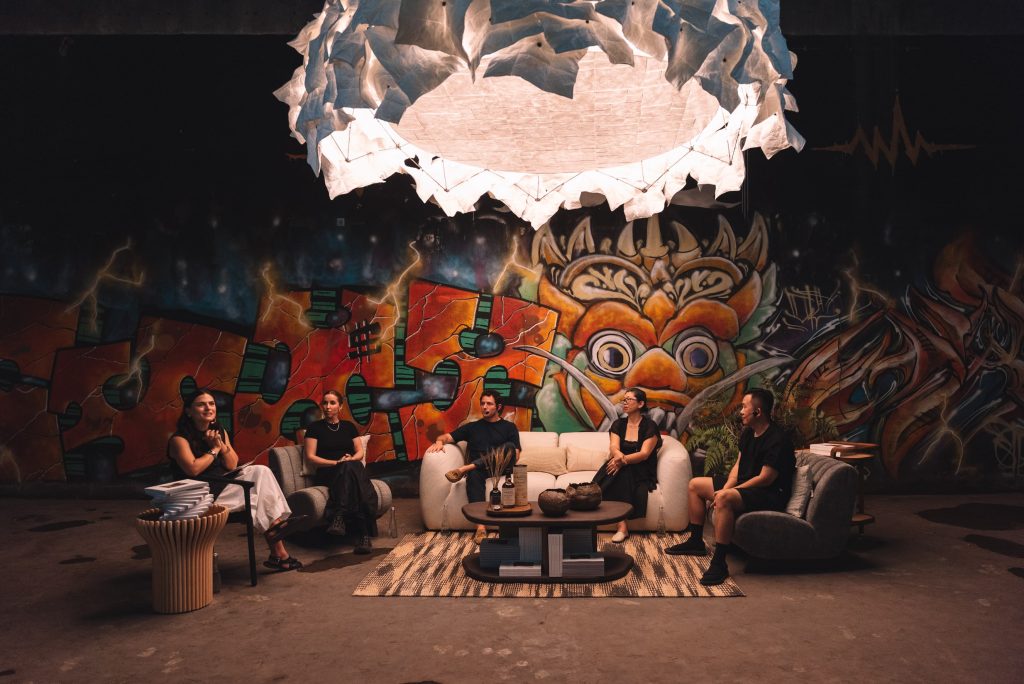
Their booth was conceived as a narrative journey, guiding visitors through the arc of Ong’s creative evolution and spotlighting key milestones along the way. From an early fascination with crochet and paper lampshades to experiments with the intricate folds of origami, the progression revealed a practice deeply rooted in craft and curiosity. The journey culminated in the debut of their latest creation—an emblem of Ong Cen Kuang’s ongoing exploration and ever-evolving identity.
Also Read: 5 Genre-Defying Installations By Women Artists At Art Basel Unlimited 2025
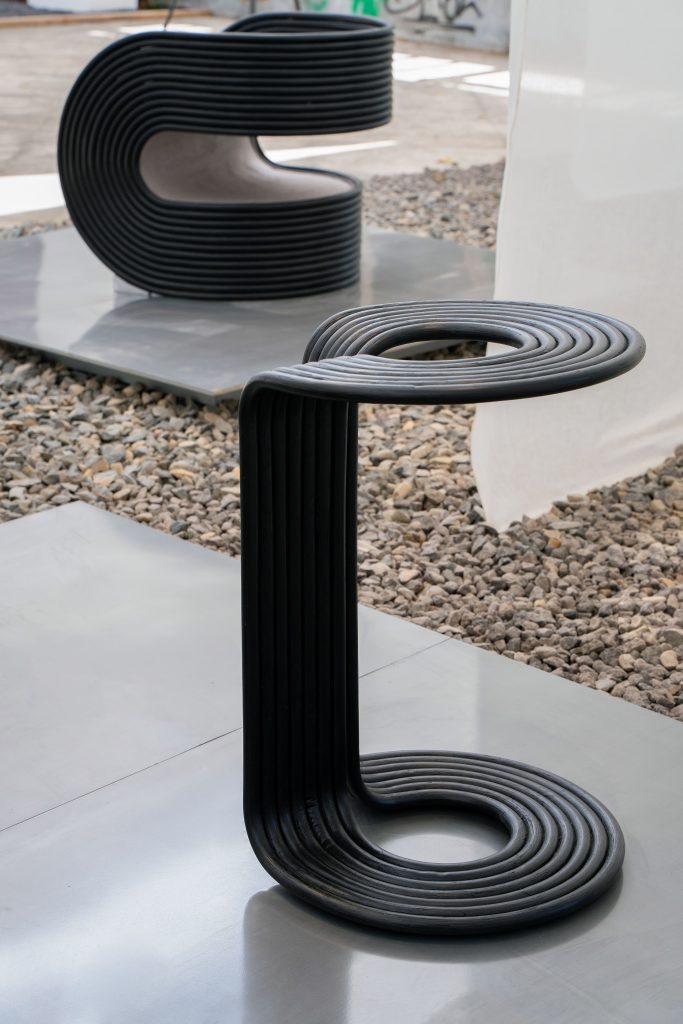
2. Pietro Franceshini’s Rotella Intreprets Rattan Into A Modernist Innovation
Architect and designer Pietro Franceschini has rolled out his first rattan furniture collection, ‘Rotella’, born from a close collaboration with Indonesian manufacturer CVP. Crafted by masterful local artisans, the collection combines innovation, quality, and a profound respect for traditional skills. Established in 1987, CVP has built up decades of expertise in working with materials such as wood, metal, rattan, Lloyd Loom, synthetic wicker, and rope. Their ability to branch out across diverse techniques has allowed them to take on projects both in Indonesia and abroad, shaping a global reputation for excellence.
A custom gravel floor laid the foundation, its textured surface evoking a sense of raw tactility and grounded calm. Above it, minimalist steel platforms rose with quiet precision, elevating the ‘Rotella’ pieces while striking a deliberate contrast between the warmth of organic rattan and the cool clarity of industrial steel. Soft, sheer drapes cascaded from ceiling to floor, layering the space with a gentle rhythm. As light filtered through and breezes moved across, the fabric shifted and swayed, creating an ever-changing backdrop that played between transparency and shadow. With ‘Rotella’, Franceschini sets out to give rattan a fresh twist. A sleek two-centimetre black pipe coils into clean, fluid shapes that evoke the playful loops of a 1990s Haribo liquorice wheel. The collection—featuring a chair, coffee table, bench, and two side tables—manages to evoke a sense of whimsy while maintaining formal elegance.
Also Read: The 5 Most Innovative Digital Works From Around The Globe At Art Dubai 2025
3. Architecture In Scale Celebrates The Union Of Craft and Design
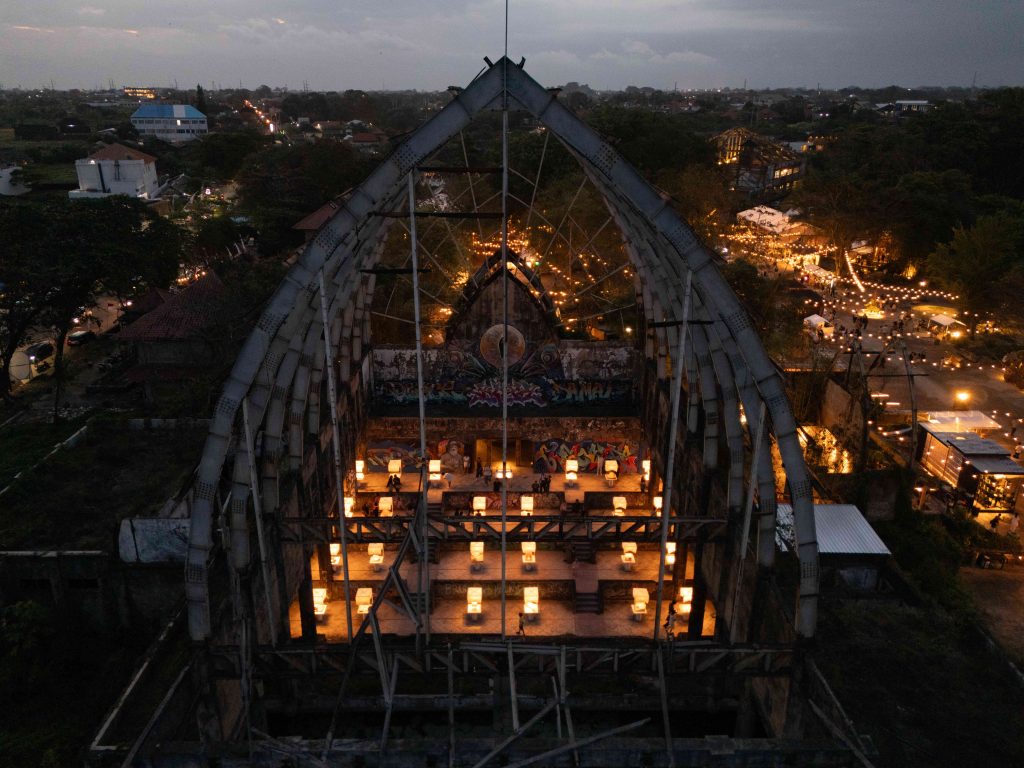
Visitors kick off the festival with a guided tour of ‘Architecture in Scale’ led by curator Suzy Annetta, the founder of Design Anthology, offering insights into design processes and opportunities for visitors to engage directly with the featured architects. Housed within the chapel of the abandoned Bali Festival Park, ‘Architecture in Scale’ exhibition unfolded beneath a soaring, partially ruined roof that was open to the sky and the weather. The bleak setting set the stage for a dialogue between decay, renewal, and design. Under the creative direction of Budiman Ong, the concept took shape: to craft displays that would not only shield delicate maquettes from the elements but also transform the ruin into something unexpectedly poetic.
Designed by RAD+AR, the solution came in the form of weather-resistant displays fashioned from Tyvek®—a lightweight, water-repellent, and translucent material. These protective covers sat atop pedestals ingeniously built from stacked paint buckets, repurposed from exhibitor Armonia’s discarded packaging. As night fell, the installation shifted in character. The Tyvek® displays began to glow from within, lantern-like in their radiance, animated by the thoughtful design of BINAR Lighting Studio and powered by the advanced control systems of LTECH. The result was an exhibition that balanced utility with poetry, echoing the rhythms of its setting—fragile, raw, and luminous all at once.
Also Read: Belgian Pavilion At Venice Architecture Biennale – In Conversation With Bas Smets
4. Waste to Wonder Pushes Waste As a Tool For Craftsmanship
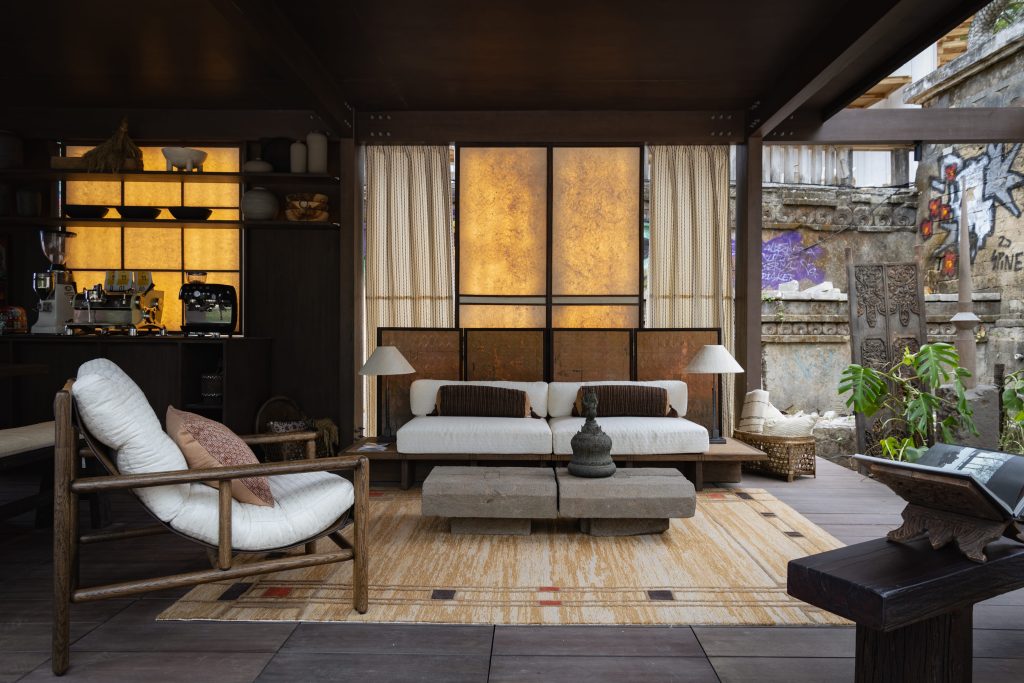
Another highlight of this year’s edition is ‘Waste to Wonder’, a programme that explores innovative ways of transforming discarded materials into functional design. Among its outcomes is a striking bookshop constructed entirely from paper tubes—an inventive reuse that redefines the possibilities of the everyday. Titled ‘Light Between Lines’, this bookshop installation designed by Indonesian architect Andra Matin reimagined the bookshop as a contemplative retail environment, shaped by the guiding principles of ‘Waste to Wonder’. Constructed using discarded packaging from exhibitors, Sandei and Coulisse INK, and built around a modular design system, the space was conceived to be both intentional and functional.
Showcasing a curated selection from Gavra Books, the bookshop evolved into more than a retail space—it became an access point to ideas on design, sustainability, and material culture. It offered visitors a reflective place to pause, read, and engage, while connecting with the larger themes that threaded through the exhibition.
Also Read: With 400 Works On Display, David Hockney 25 At Fondation Louis Vuitton Takes Paris By Storm
5. Pavilion of Wa Is A One-Room Hotel Filled With Indonesian Design
The festival’s most ambitious concept took shape in the ‘Pavilion of Wa’, envisioned under the direction of interior designer Thufeil Hadi. Conceived as a fully operational one-room hotel, the pavilion unfolded within a modular timber framework designed to adapt seamlessly to various landscapes. At once experimental and functional, it offered a glimpse into how architecture can move beyond installation to create immersive, lived-in experiences.
Drawing on local craft traditions, the interior was layered with bespoke details: furniture by Juno Home, handwoven textiles by Lana Daya, carpets from Floor Studio, and bedding by Madeem. Together, these elements grounded the pavilion in a sense of place, celebrating Indonesian artistry while offering the comforts of a refined retreat.
At Jia Curated, the Indonesian principle of ‘Gotong Royong’, an Indonesian term that translates to ‘communal effort,’ comes alive as brands, designers, and makers collaborate within shared spaces. “It’s about connecting people and building a design ecosystem that endures beyond the event,” says Ong.