
A Private Museum Of Arts Opens In Kazakhstan With A Fresh Take On Central Asian Art
The Almaty Museum of Arts, designed by Chapman Taylor, has opened in Kazakhstan, establishing a new cultural institution dedicated to contemporary art in Central Asia and internationally.
- 7 Oct '25
- 11:28 pm by Simran Almeida

Within a region steeped in the echoes of nomadic traditions, Soviet dominion, and the tremors of post-independence cultural awakenings, a museum of Arts opened last month. Nestled at the foothills of the Tian Shan range in Almaty, Kazakhstan, the museum spanning 108,285 sq. ft. was founded by entrepreneur, philanthropist, and collector Nurlan Smagulov. Envisioned by British firm Chapman Taylor, the Almaty Museum of Arts walks a tightrope between the urban landscape and its mountainous surroundings, with a pair of interlocking limestone and aluminium-clad volumes. Its central atrium, monikered ‘Art Street,’ anchors movement while inviting community gatherings, becoming a third space in the city’s fabric.
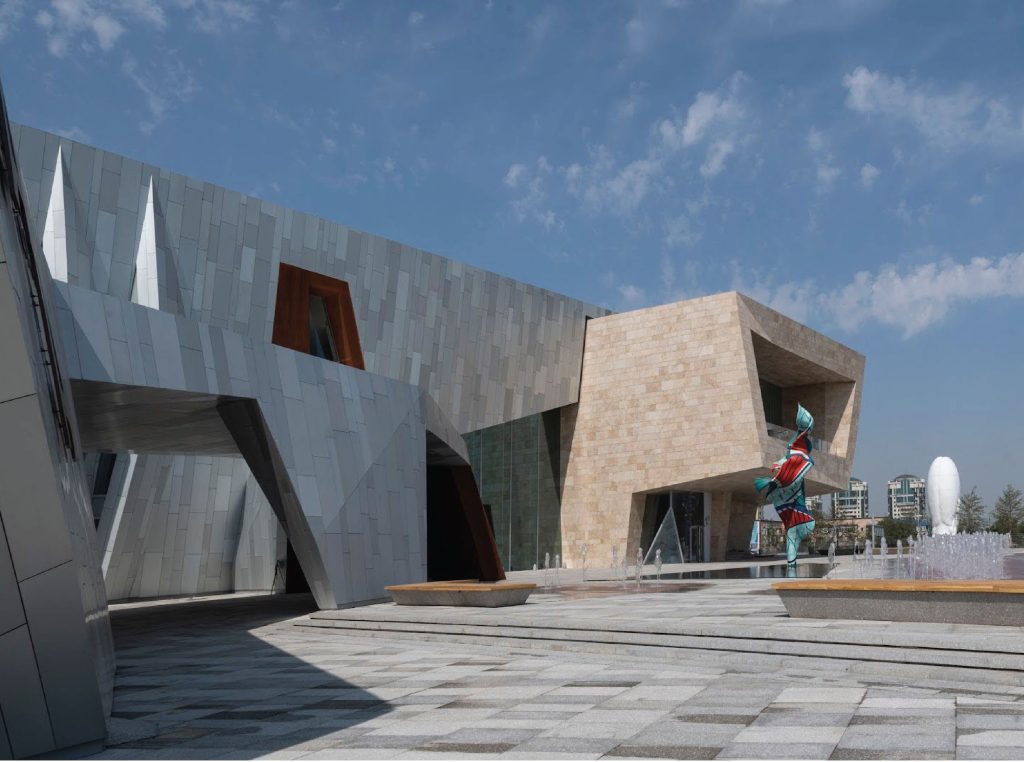
In keeping with the growing international interest in Central Asian contemporary art, this museum features landmark retrospectives from leading global and Central Asian voices. From a permanent collection of 700 artworks by Smagulov and immersive artist rooms to live performance programmes and monumental outdoor commissions. “Art has had a profound impact on my life, and it is my hope that the Almaty Museum of Arts offers the same sense of inspiration and connection to others,” remarks Smagulov.
A Collector’s Vision
The idea of the Almaty Museum of Arts was conceived in autumn 2020, with construction beginning in 2022. This museum brings Smagulov’s vision to life, positioning Kazakhstan as a significant country in the global contemporary art scene and creating a landmark institution that promises a lasting cultural legacy. A prominent Kazakh entrepreneur and philanthropist, Smagulov is the President and Founder of Astana Group, established in 1992, which has grown into a leading holding in automotive, retail, and real estate. With a passion for culture and social progress, he founded the Nurlan Smagulov Foundation in 2020 to support educational and social initiatives across Kazakhstan.
Also Read: Art Basel 2026 To Debut In Doha: A New Chapter In Global Art
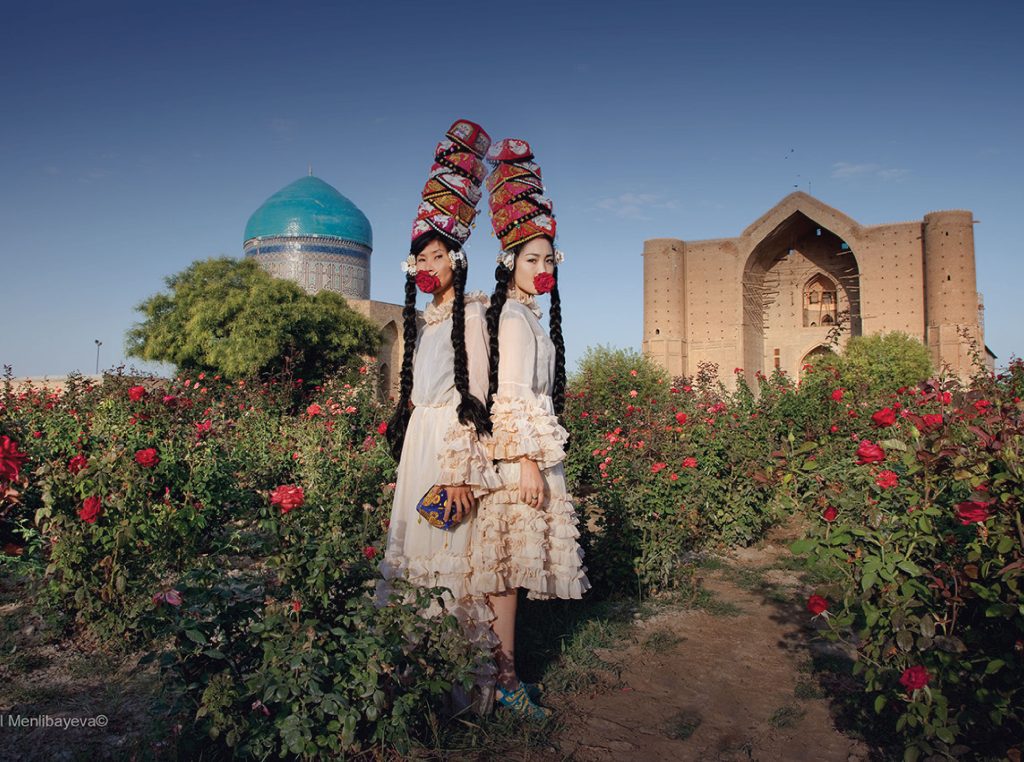
His creative flair wavered toward art, as he collected works by contemporaries including Almagul Menlibayeva, Askar Yesdauletov, and sculptures by Eduard Kazarian, before expanding to embrace modern and international artists. Inspired by leading figures in the contemporary art world, the museum’s programme too, is now guided by Artistic Director Meruyert Kaliyeva, founder of Almaty’s Aspan Gallery, and Chief Curator Inga Lāce, whose work includes the Latvian Pavilion at the 2019 Venice Biennale. “Our vision is to spark curiosity, dialogue, and global engagement with the cultural wealth of Central Asia,” remarks Kaliyeva. She adds, “By grounding the museum in local histories while embracing global perspectives, we hope to build a space where art can be both a reflection and a catalyst for change.”
A Bridge Between City And Mountains
The museum’s layout was crafted in collaboration with Lord Cultural Resources, whose global portfolio spans landmark institutions including San Francisco Museum of Modern Art, the Guggenheim Bilbao, and the Centre Pompidou in Paris. Taylor translated the concept, collaborating closely with engineering consultants Buro Happold to ensure that every space supports multifarious exhibitions.
Also Read: Renowned Gallerist Sundaram Tagore On Buying Art In A Virtual Art World
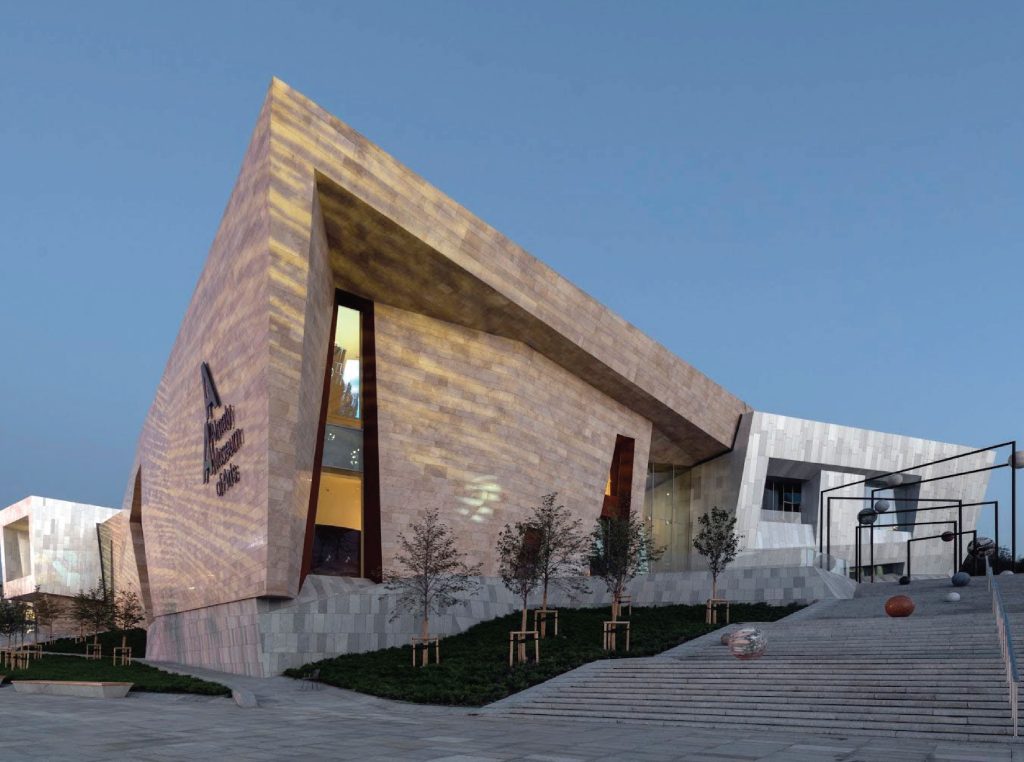
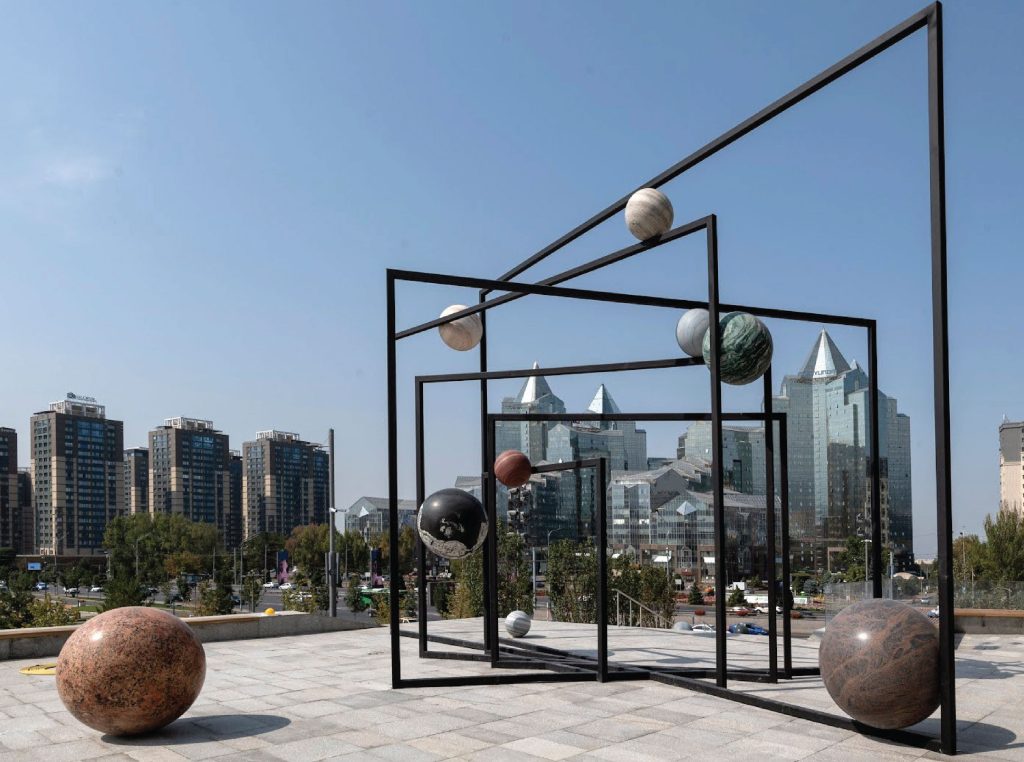
Orchestrating a dialogue between the terrains, its architecture unfolds through a series of stairs leading visitors to ‘Pre-Position’ (2023), a striking installation by Berlin-based artist Alicja Kwade. With stone spheres and steel forms borrowing from the geological landscapes of Kazakhstan’s Torysh Valley, the installation evokes a sense of celestial geometry, time, and elemental forces.
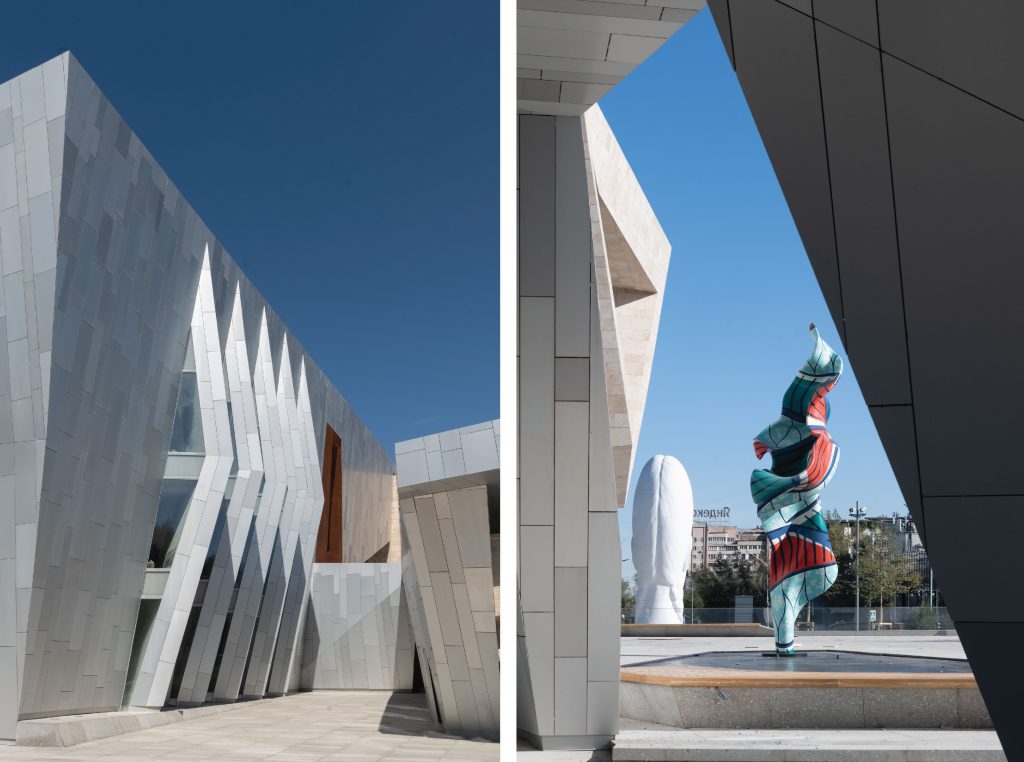
It transpires through two interlocking L-shaped volumes, where one is clad in limestone, evoking the austerity of the Tian Shan range, while the other is sheathed in glimmering aluminium, reflecting the city’s brutalist verve. It is due to this duo’s interlocking assembly that terraces extend outward, framing vistas of Almaty’s skyline and establishing a seamless visual dialogue between city and landscape.
Also Read: #DPExclusive: A Kaleidoscopic Ahmedabad Apartment That Tells The Story Of An Art Lover’s Life
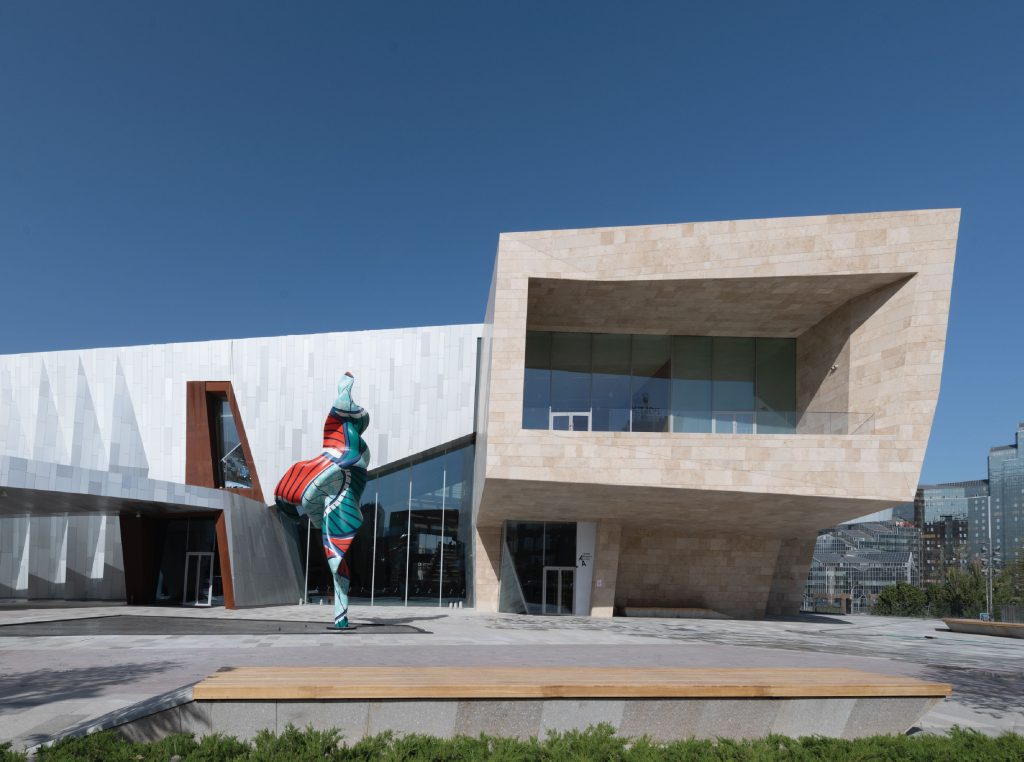
At the heart of the museum lies a soaring 18-metre-high, airy atrium called ‘Art Street,’ that reinterprets the historical role of courtyards in Central Asia, which were once spaces for trade, social gatherings and civic exchange. This court plays a similar role of a vibrant public space, linking galleries and inviting visitors to pause, reflect, and engage with works on themes of identities. It houses works like; Spanish artist Jaume Plensa’s twelve-metre-high portrait of a woman with closed eyes, ‘NADES’ (2023), a nod to Kazakh traditions, and British-Nigerian artist Yinka Shonibare’s aluminium icon ‘Wind Sculpture (TG) II’ (2022), reflecting on the cultural identities and colonial legacies.
A Contemporary Take On Central Asian Art
Inside the museum opens with a rich inaugural programme that reflects both the ancestries and the evolving future of Central Asian art. “This inaugural programme brings together artists across generations, those who laid the foundations of modern art in the region and courageously began asking questions about national identity at a time when such inquiries could lead to persecution under the Soviet regime, and those who are redefining its future today,” Kaliyeva remarks.
Also Read: Art Confidential: Farah Agarwal On Her 5 Most Recent Acquisitions
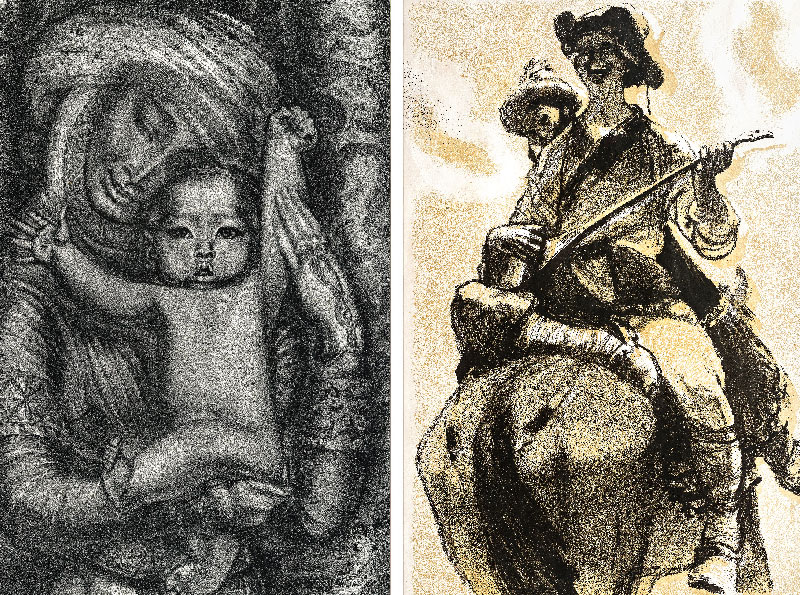
The museum’s debut exhibition, titled ‘I Understand Everything,’ is by a trailblazing artist, Almagul Menlibayeva, one of the region’s most pioneering voices. Curated by Gridthiya Gaweewong, the artistic director of Jim Thompson Art Centre in Bangkok, the exhibition traces her four-decade trajectory with works ranging from textiles and painting to photography, performance, and AI. It unfolds in two chapters: one centred on landscapes of steppe, the Aral Sea, and the Semipalatinsk test site; the other drawing toward Kazakhstan’s geopolitical terrains, Stalin-era labour camps, and women’s agency along the Silk Road. These chapters revolve around the themes of myths, memories, and symbolic geographies of Eurasia, dissolving boundaries between past and present.
Further expanding the narrative is ‘Qonaqtar,’ loosely translated to ‘guests,’ a wide-ranging showcase curated by Inga Lāce from the founder’s collection of over 700 works. The exhibition features modernist icons such as Aisha Galymbayeva and Salikhitdin Aitbayev in conversation with contemporary artists like Yerbossyn Meldibekov and Saodat Ismailova. “The artworks trace how artists forged a modern Kazakh identity, weaving together folklore, nomadic traditions, everyday rituals, and modernist aesthetics, all while navigating Soviet constraints and the deep heritage of Central Asia,” shares the Chief Curator Lāce.
Beyond The Conventional Exhibition
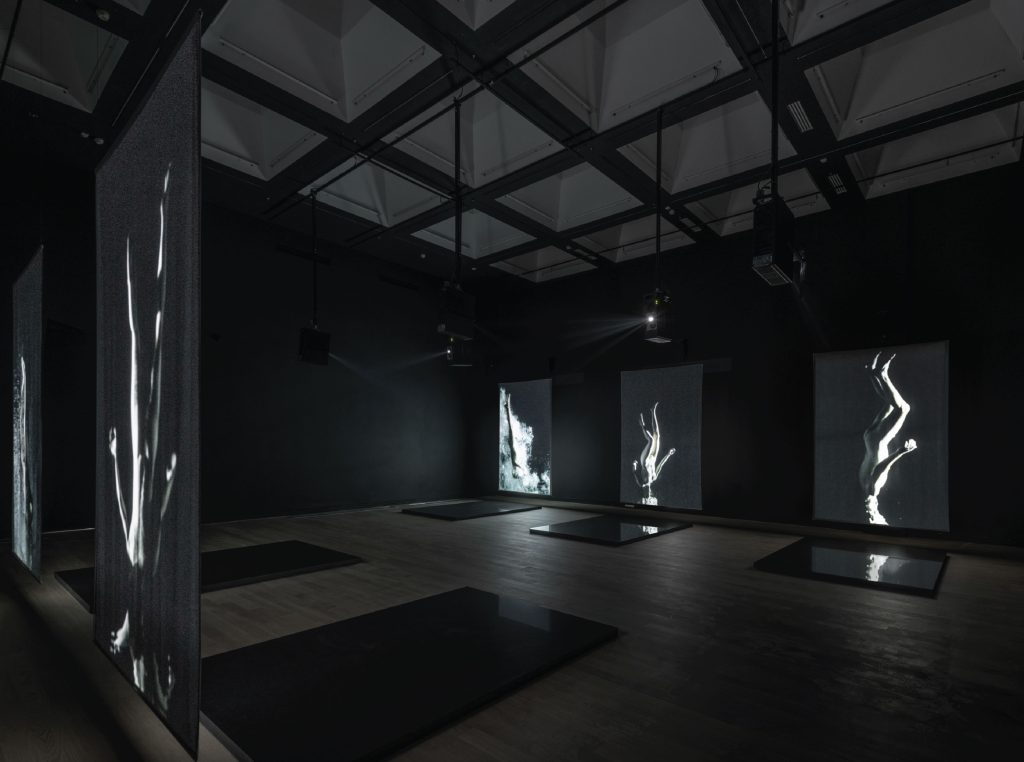
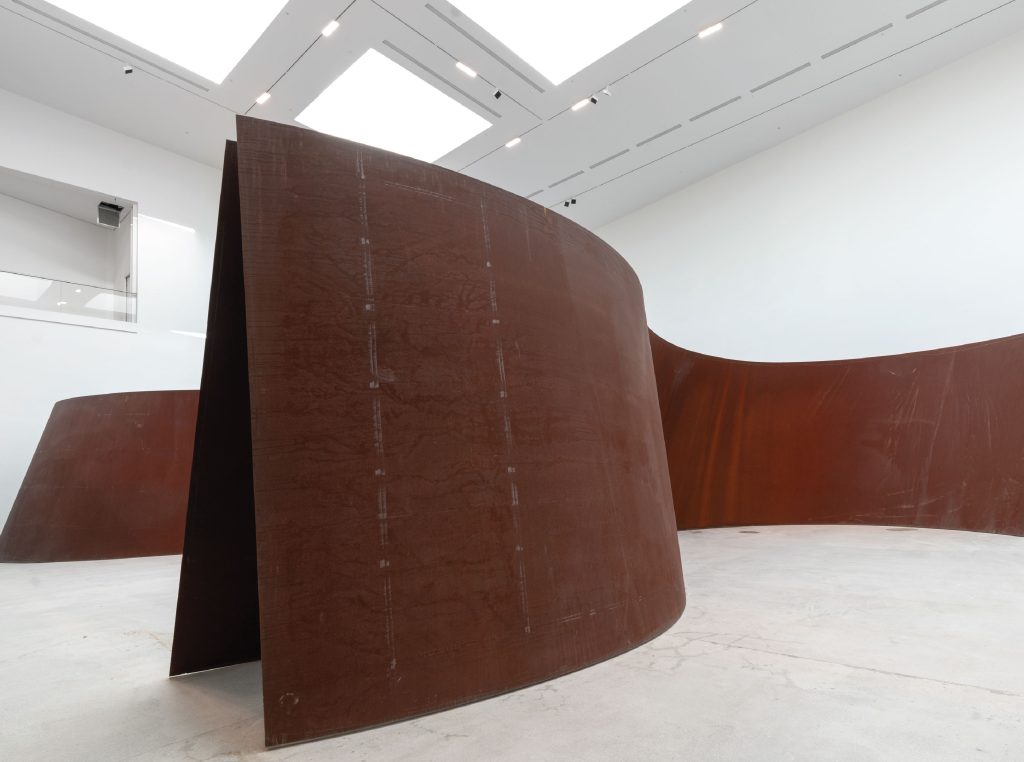
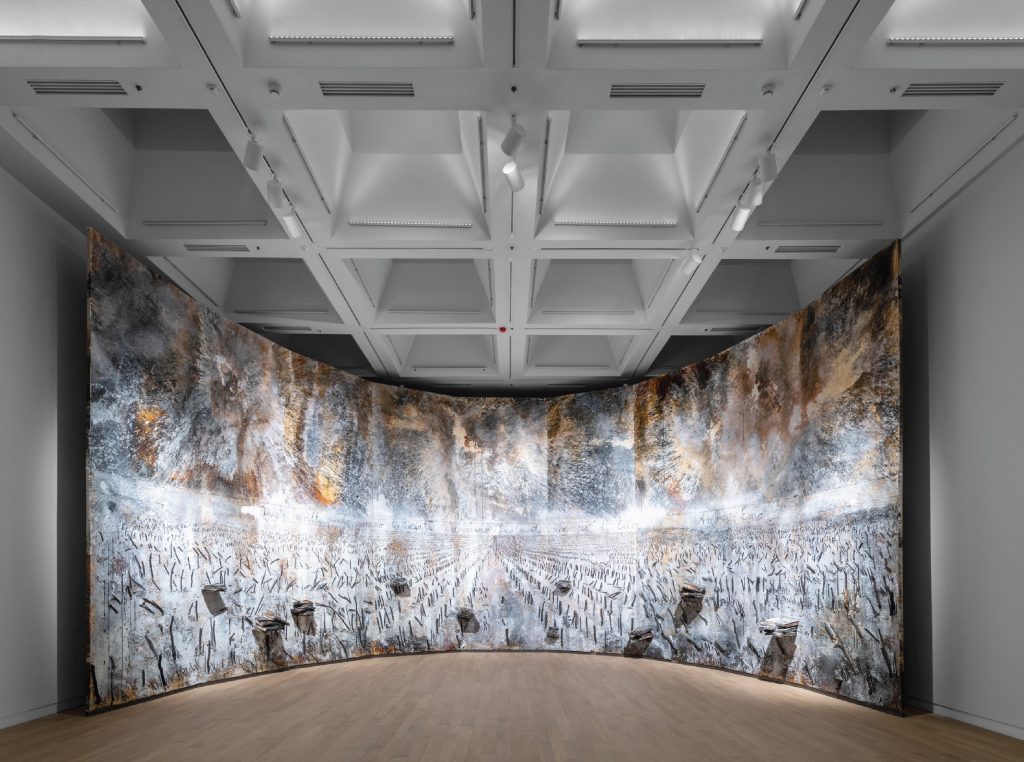
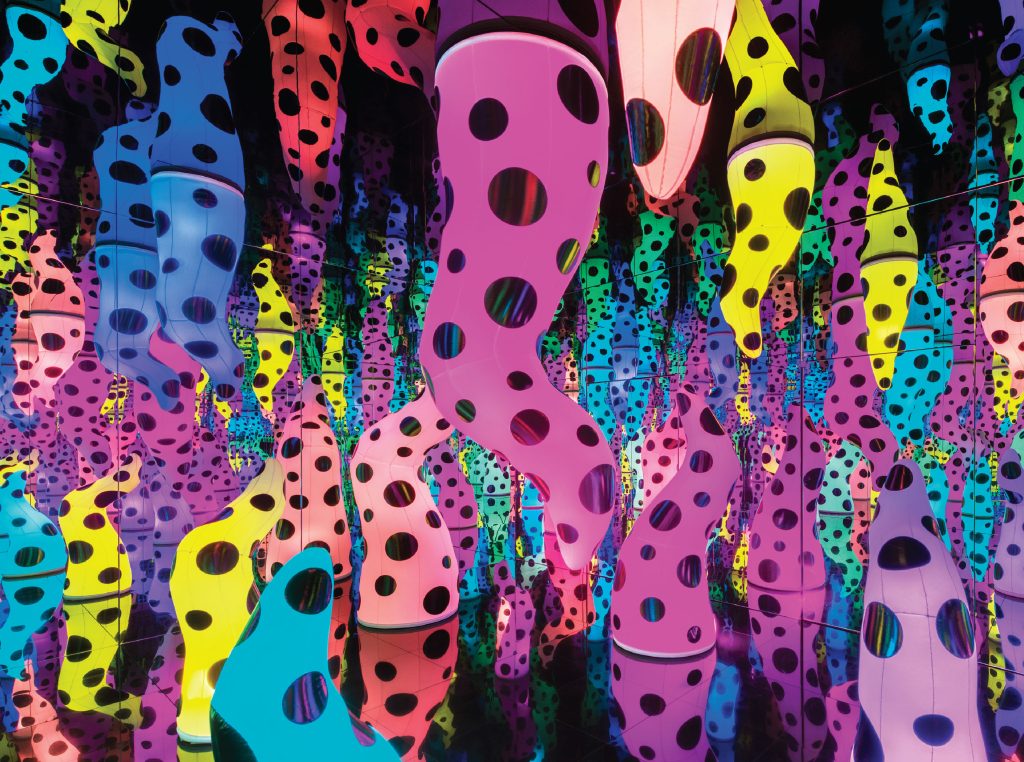
The museum also houses a live programme, curated by Armenian curator Anne Davidian, punctuating the spaces with provoking performance, film, talks, and communal gatherings, inspired by the region’s rich oral and musical traditions. The museum also features dedicated Artist Rooms for immersive encounters with global masters like Richard Serra’s ‘Junction’ (2011), Anselm Kiefer’s monumental ‘Questi scritti…’ (2020–21), Yayoi Kusama’s Infinity Mirror Room ‘LOVE IS CALLING’ (2013), and Bill Viola’s ‘Stations’ (1994).
Also Read: Yayoi Kusama Unveils Her Largest-Ever Exhibit At New York’s David Zwirner Gallery
The Almaty Museum of Arts, with its exhibitions, collections, and Artist Rooms, bridges Kazakh heritage with global contemporary art, offering Central Asian voices a space to explore migration, borders, spirituality, identity, and memory. “As I explored the collection, I was struck by recurring images of gatherings, food and the landscape of the steppe and wondered what lay beyond these seemingly idyllic scenes?” muses Lāce. Poised to inspire future generations, the museum’s programmes—including A History in Acts and Gestures: Performance. The museum’s programme will also host Central Asia and the Caucasus, traveling research seminars ‘Building the Field of Modern Art History in Central Asia’ which is in collaboration with The Institute of Fine Arts at New York University. It also features hands-on workshops, actively shaping the region’s artistic trajectory, establishing a dynamic cultural hub for both reflection and exchange.