
5 New Galleries Making Their Debut At PAD London 2025
PAD London, the city’s premier design fair, returns from 14 to 19 October. DP spotlights three trailblazing galleries making their debut, redefining global design through bold, evocative narratives.
- 19 Oct '25
- 11:58 am by Simran Almeida

Design travels miles, adapting cultures and rituals of the foreign land. In keeping with that, what began in Paris as a celebration of art and design found its way across the channel ten years later. The Pavilion of Art and Design, monikered as PAD, migrated to London in 2007, presenting objets that blur the line between functionality and art. PAD London, the city’s premier design fair, was established in 1998 by Parisian antique dealer Patrick Perrin and was one of the first curated design fairs in the world. Returning for its 17th edition, to Berkeley Square—an eternal muse for gastronomy, couture, and commerce—it gathers curators, collectors, and aesthetes for a dose of design.
Set to take place from 14 to 19 October, the fair shares a stage with Frieze London and celebrates design ingenuity with a stellar roster of contemporary design galleries and a curated line-up of international creatives. With highlights from 67 international exhibitors, it features oeuvres that fuse masterful craftsmanship with ingenious concepts. This year, PAD London proudly heralds the arrival of 11 galleries that redefine the design discourse through ingenious socio-cultural narratives and fresh perspectives led by nascent dealers. Celebrating London’s ever-evolving devotion to design, DP spotlights five visionary galleries debuting this year.
1. Pulp Galerie
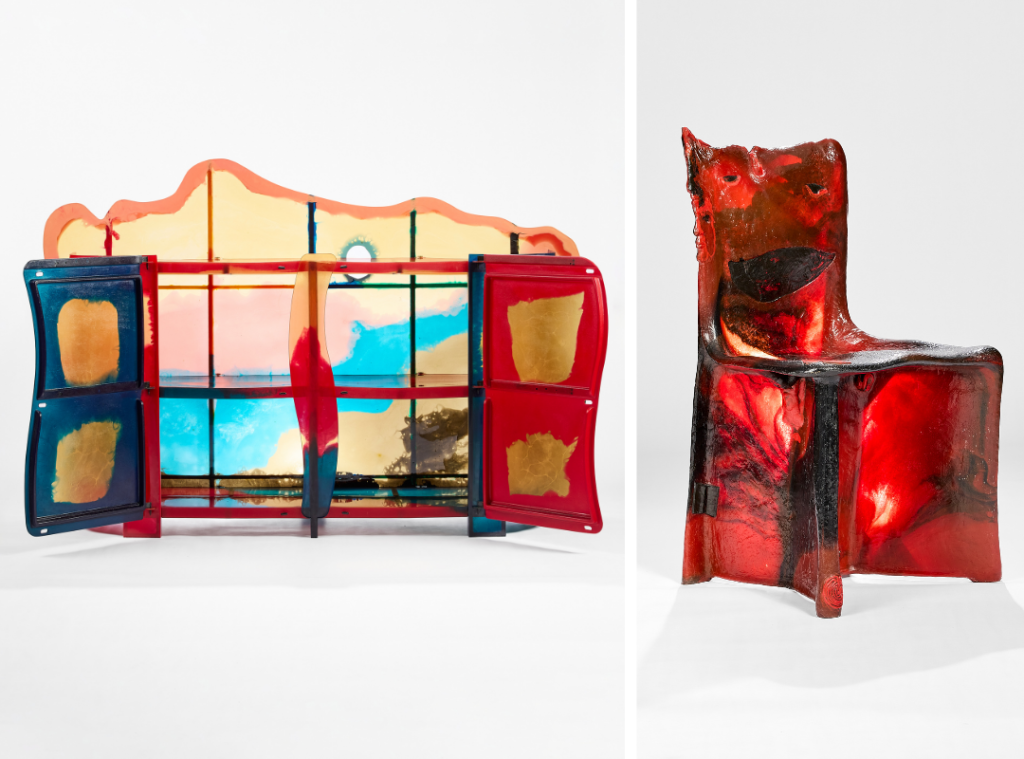
For its debut at the PAD London, Pulp Galerie, alongside scenographers Cyri le Van Dievoet and Hugo Travaux, orchestrates an immersive journey to an excavation site featuring the works of the eminent artist Gaetano Pesce (1939-2024). The exhibition, dubbed ‘Modern Relics,’ reveals a monographic selection of his rare and major pieces through an immersive uchronia. Once hidden from sight, these rare pieces of furniture now appear as unearthed treasures, evoking the poetic spectacle of an archaeological excavation. Founded in 2022 by Paul Ménacer-Poussin and Paul-Louis Betto, Pulp Galerie champions rare, provocative design, showcasing pieces that transform furniture into immersive, emotive experiences. Pesce, too, has always questioned conformist norms through art objects and furniture, evoking feelings of aversion and fascination. Known for his playful and ethereal décor, his works carry subtle hints of socio-political commentary.
Also Read: Kenneth Cobonpue’s Artistic Furniture Shapes A Mumbai Home
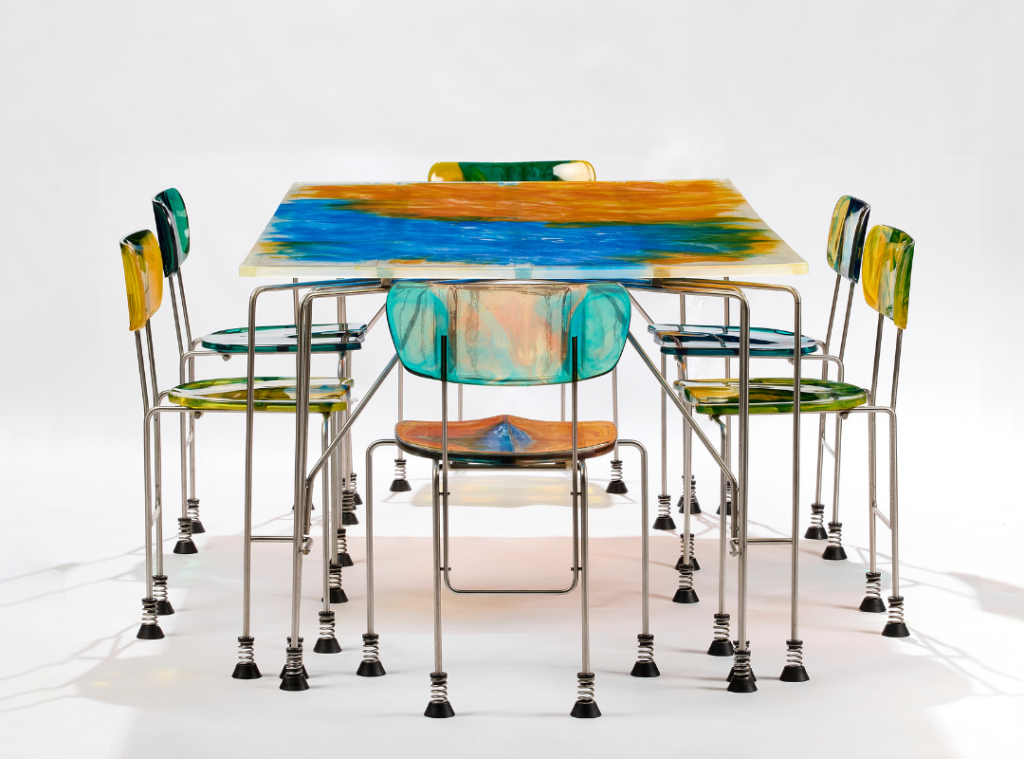
An immersive excavation-like scenography of earth, sand, and resin transpires at the fair featuring Pesce’s pieces like the Sikh (Sick) Cabinet (1995), a partially buried resin-and-bandage piece with a cast iron counterweight; the modular Luigi (O Mi Amate Voi) Bookcase (c. 1982). Further, the sculptural Greene Street Armchair (c. 1987), the experimental ’Pratt n.8 Chair’ (c. 1984) with relief motifs and the glowing Square Lamp (1986) emerge as treasure troves inviting visitors to experience the artist’s visionary designs.
2. Friedman Benda
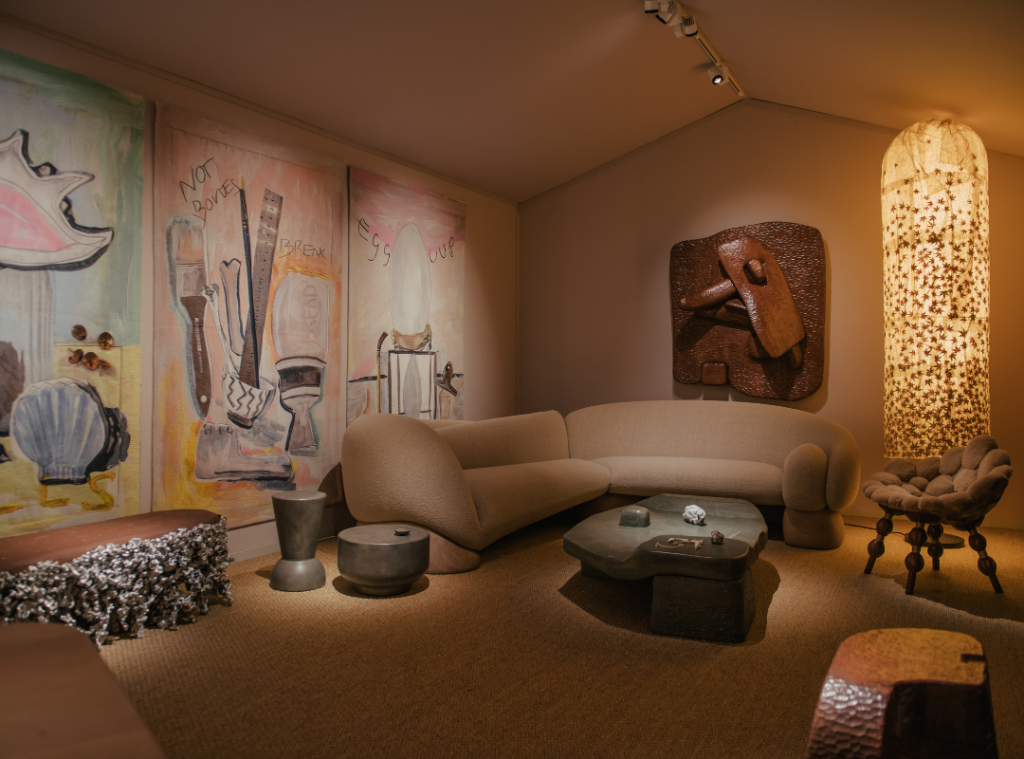
Friedman Benda’s entry at PAD London is curated by British designer Faye Toogood and has snagged the Contemporary Design Prize. “The ritual of collecting and obsessing over natural objects, rearranging and trying to make sense of the world through them… It’s an enduring influence on my practice,” explains Toogood. Featuring works by a diverse array of artists, the showcase titled ‘The Magpie’s Nest’ is a nostalgic memoir of curiosity. Founded in 2007 by Marc Benda, Barry Friedman, and Jennifer Olshin the gallery reshapes design narrative by championing radical art and historically overlooked perspectives. Toogood blends sculpture, furniture, and fashion to create each series that explores a theme, often rooted in art history, personal experience, or elemental forces.
Also Read: Alchemies, A Journey Through Bharti Kher’s Most Ambitious UK Exhibition
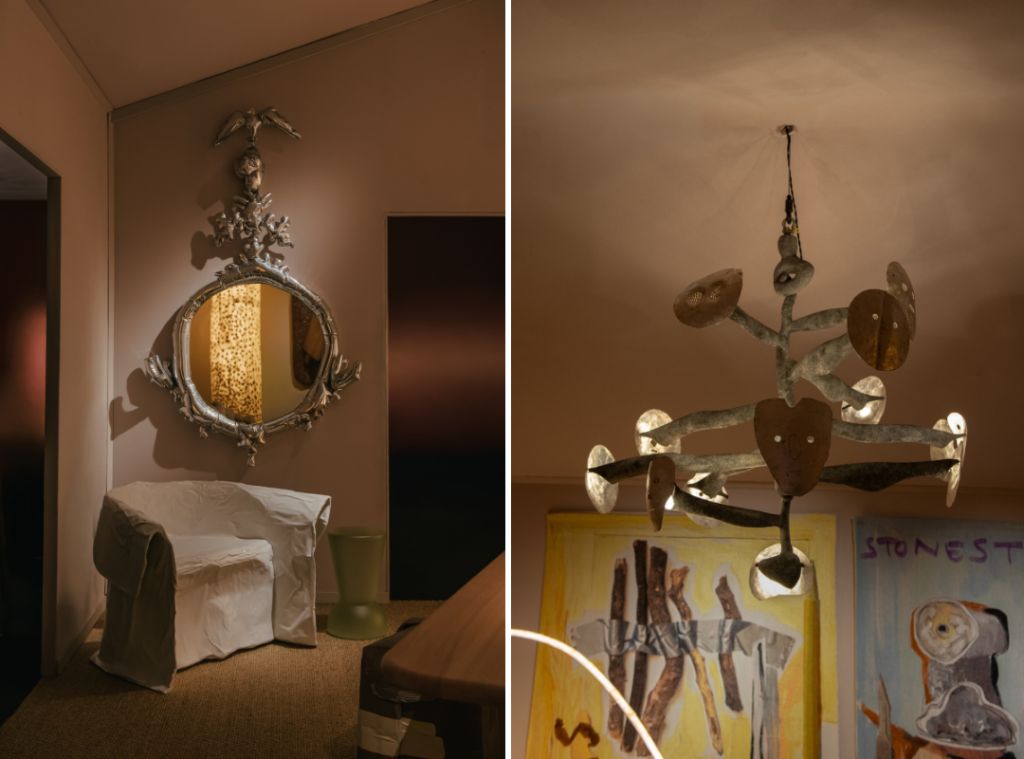
Set against a backdrop of Toogood’s foraged natural objects—sticks, stones, and bones, the showcase presents an immersive design narrative through her works titled from her series ‘Assemblage.’ It features the curator’s new oeuvres, such as Vale, a hand-carved oak wall relief, and The Magpie Tapestries, a series of five wool textiles inspired by the curator’s studio tools and collected curiosities. With a collective sculptural work by artists like: Andrea Branzi, Estúdio Campana, Najla El Zein, Misha Kahn, Raphael Navot, Thaddeus Wolfe and Faye Toogood herself, the showcase evokes a sense of wonder, memory, and blurs the lines between the personal and the universal.
3. Sceners Gallery
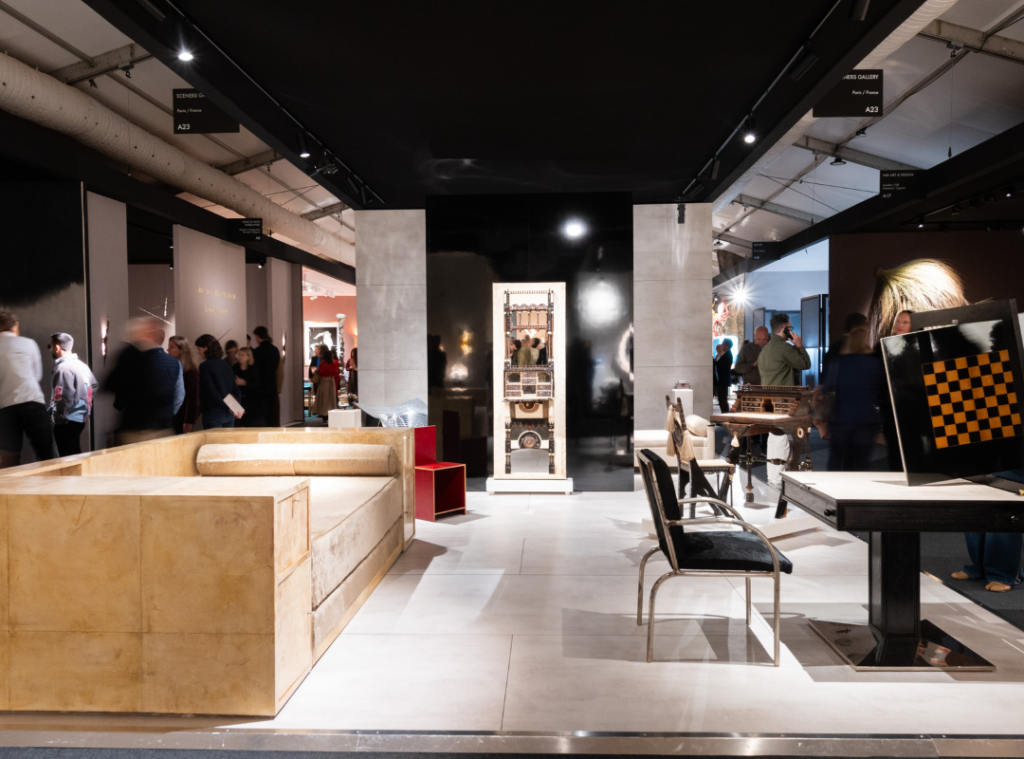
For the Booth Prize-winning Sceners Gallery, it is their first time participating in PAD London. Staging a rare convergence between artists and designers, the showcase embodies a shared gesture across centuries, creating kinships between seemingly contrasting creations. At the crossroads of eras, the showcase suggests an inconspicuous and subtle reflection on the enduring interaction between history and modernity. Founded in 2024 by David Atlan and Jonathan Haddad, the gallery crafts dialogues between rare objects and contemporary works, celebrating craftsmanship while blurring the lines between past and present. Through anachronism, its emphasis is on raw materials, light, and texture, blurring the line between art and reality.
Also Read: Mazahir Hussain On Kashmiri Identity, Brown Bodies And Rewriting Orientalism
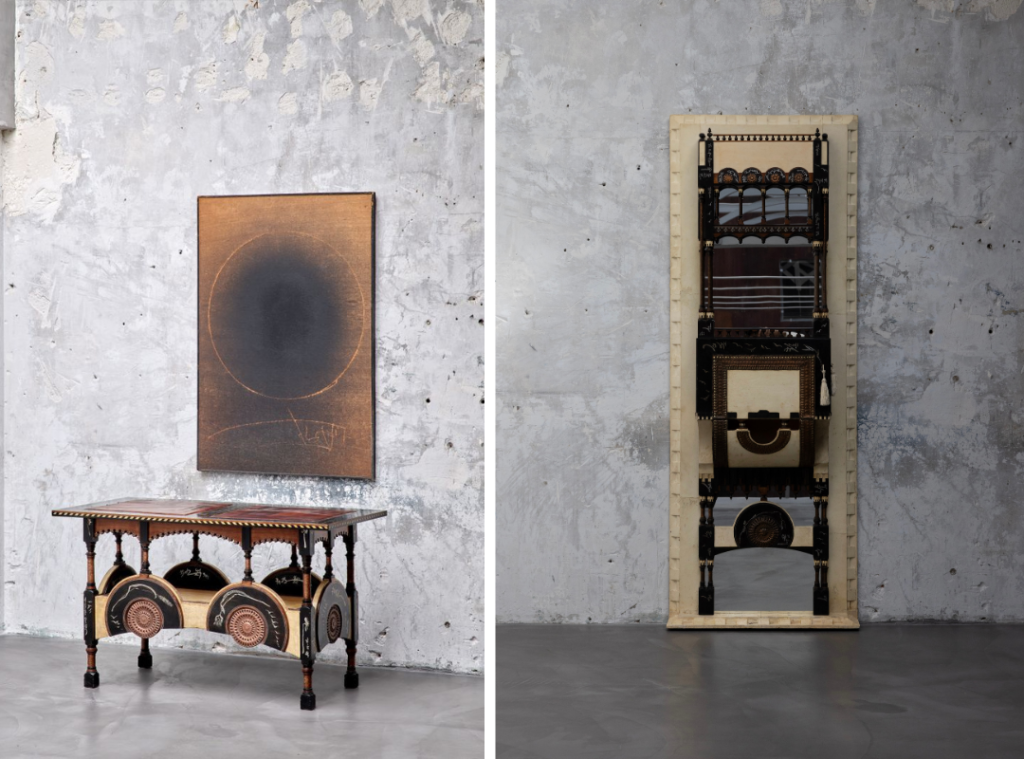
Its cinematic showcase at the fair displays works of different artists: painter Jean Degottex (1918-1988), Donald Juddi (1928-1994), designer Carlo Bugatti (1856-1940), architect Jacques Adneti (1900-1984), artist Ryoji Koie (1938-2020) and Ron Arad. Crafting a choreography of matter and meaning, where collecting becomes an act of orchestration. It displays a Carlo Bugatti console table (1900), featuring hammered copper inlays and circular Italian Liberty motifs, which share its geometry with Jean Degottex’s 1967 ‘Horsphères’ painting, radiating meditative abstraction. Jacques Adnet’s monumental parchment-covered sofa (1933) evokes the quiet elegance of a 1930s smoking room, while Ron Arad’s geometric Vienna Secession game table injects playful energy. Completing the dialogue, a rare 1995 bronze by Japanese ceramicist Ryoji Koie alchemises raw material into refined form.
4. Booroom Gallery
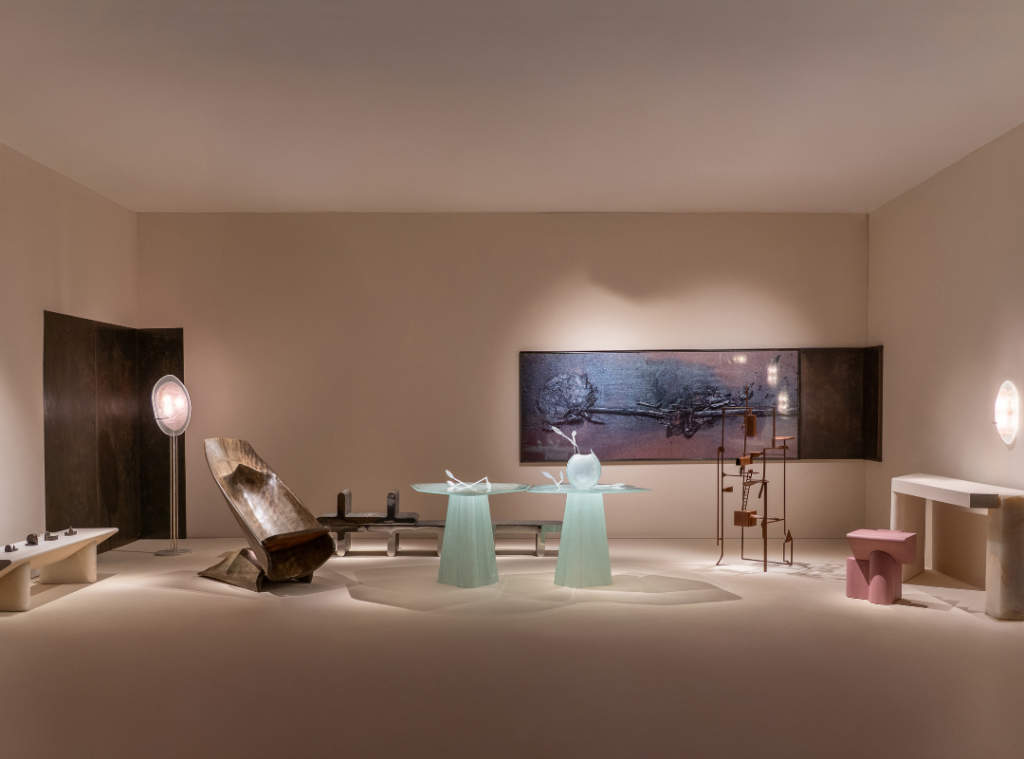
For its maiden appearance at the PAD London, Booroom Gallery spotlights Brazilian architect, designer José Zanine Caldas (1919 – 2001), alongside emerging talents. It is the first-ever time the fair receives participation from the Middle East and Cyprus. Displaying eccentric and sculptural works by multifarious artists, the exhibit pays homage to the art of craft. Founded in 2014 by Irina Budtseva-Vinitskaya and later joined by her husband, Maxim Vinitsky, Booroom Gallery bridges the worlds of art and collectable design from the 20th and 21st centuries. With a curatorial ethos rooted in emotion, materiality, and cross-cultural dialogue, the gallery champions both visionary masters and emerging talents who challenge and expand contemporary aesthetics.
Also Read: Bijoy Jain & AR Rahman Takeover Pharrell’s Vuitton Vision
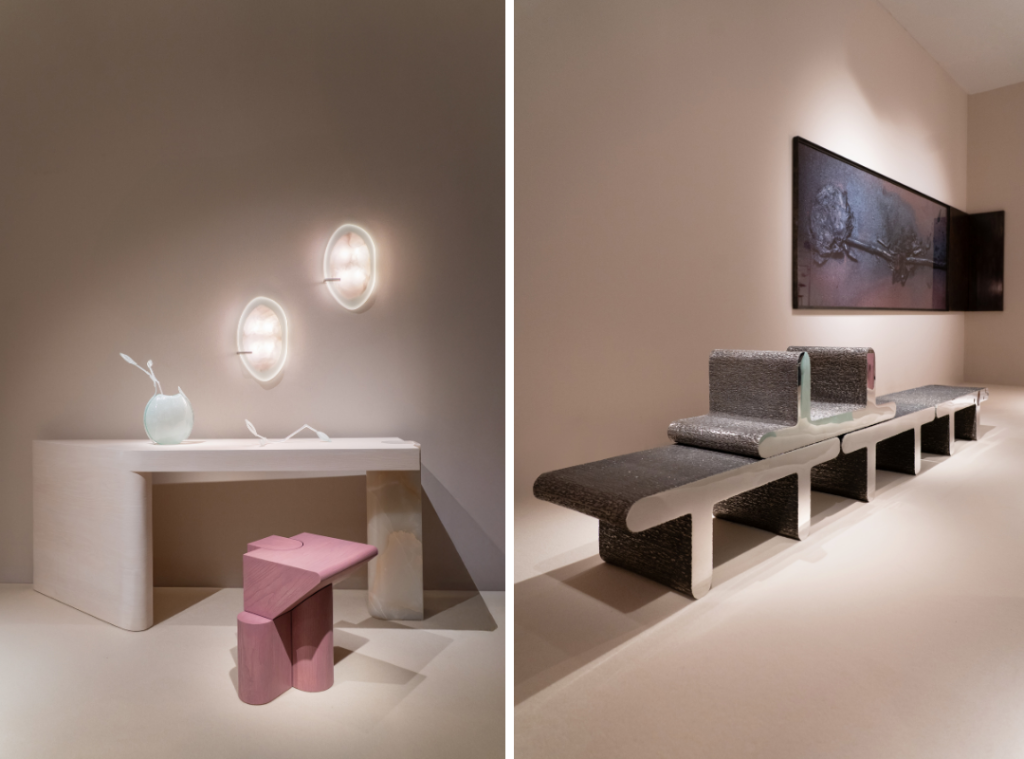
At the fair, the gallery unveils a rare piece from the architect’s 1970s ‘Móveis Denúncia’ (Protest Furniture) series for the first time, presenting the ‘Canoa Chair,’ which drafts a cogent narrative of craft and resistance. The chair is paired with intricate glass works from a Russian designer, Ksenia Breivo’s ‘Bijoux’ collections inspired by the eponymous 1960s ballet staged by artist and choreographer George Balanchine. This collection showcases the contrasts between the fragile and enduring character of glass, achieved through kiln‑forming techniques that produce its precise shades. It also presents a sleek wooden sculpture by Portuguese artist Rui Matos and designer Charles Kalpakian’s new additions to his Castle collection. Completing the ensemble are Ariana Ahmad’s poetic ‘La Lune’ light sculptures, new works by emerging artist Kolya Dykhne, and a fresh piece from Lena Solovyeva’s ‘Post Florum’ series. The series reflects on the value of life through grief, using a fallen, fragile flower as a symbol of loss. Each manually printed piece subtly varies in light and contrast, capturing delicate melancholy while underscoring life’s fragility and shared vulnerability.
5. RINCK x The Guild of Saint Luke
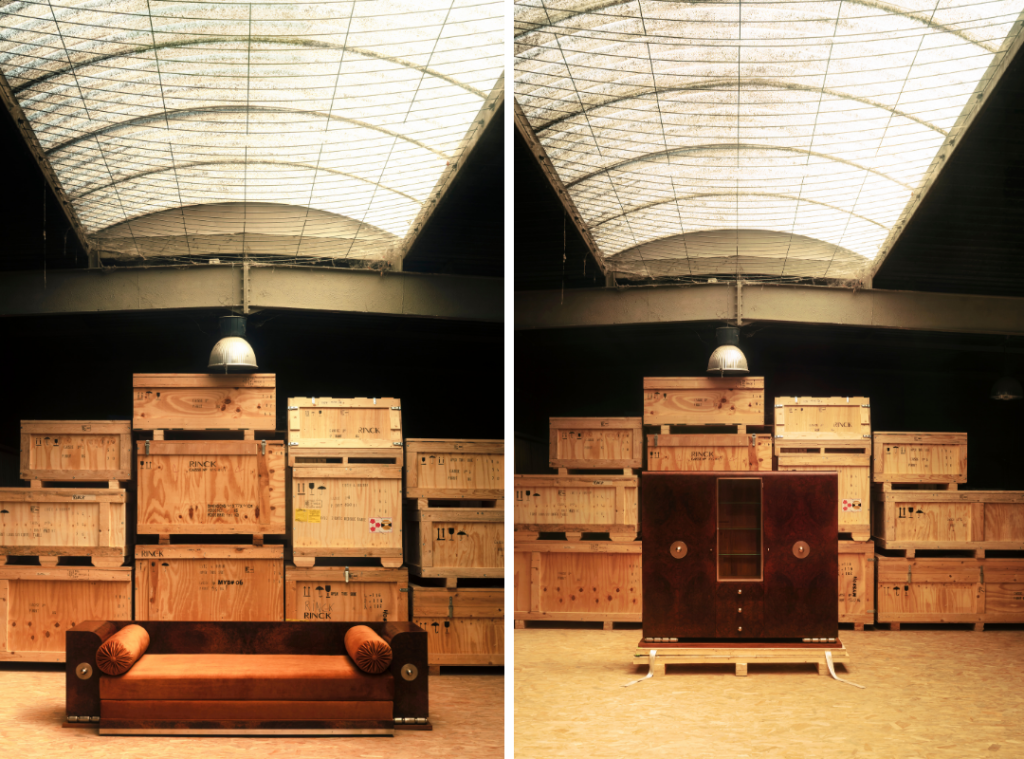
For its foray at the PAD London, RINCK and The Guild of Saint Luke join forces to pay homage to the storied craftsmanship and timeless allure of Art Deco. Juxtaposing restored furniture pieces by Eugène Rinck (1893–1964) with The Guild of Saint Luke’s moody, decadent and contemporary reinterpretation, this showcase explores the duality between past and present. A storied ensemblier décorateur since 1841, Rinck, founded by Jean Rinck, is celebrated for crafting exquisite interiors and collectable furniture pieces that embody French savoir-faire and timeless elegance. Guided by its philosophy of Remastering the Past, the Guild merges heritage craftsmanship with contemporary design through restorations, collaborations, and evocative installations across eight countries. United by a shared fascination for the memory of form and design, the two galleries unite to contrast heritage with reinterpretation.
Also Read: 5 Indian Artists At The Berlin Biennale 2025 Who Are Redefining Contemporary Art
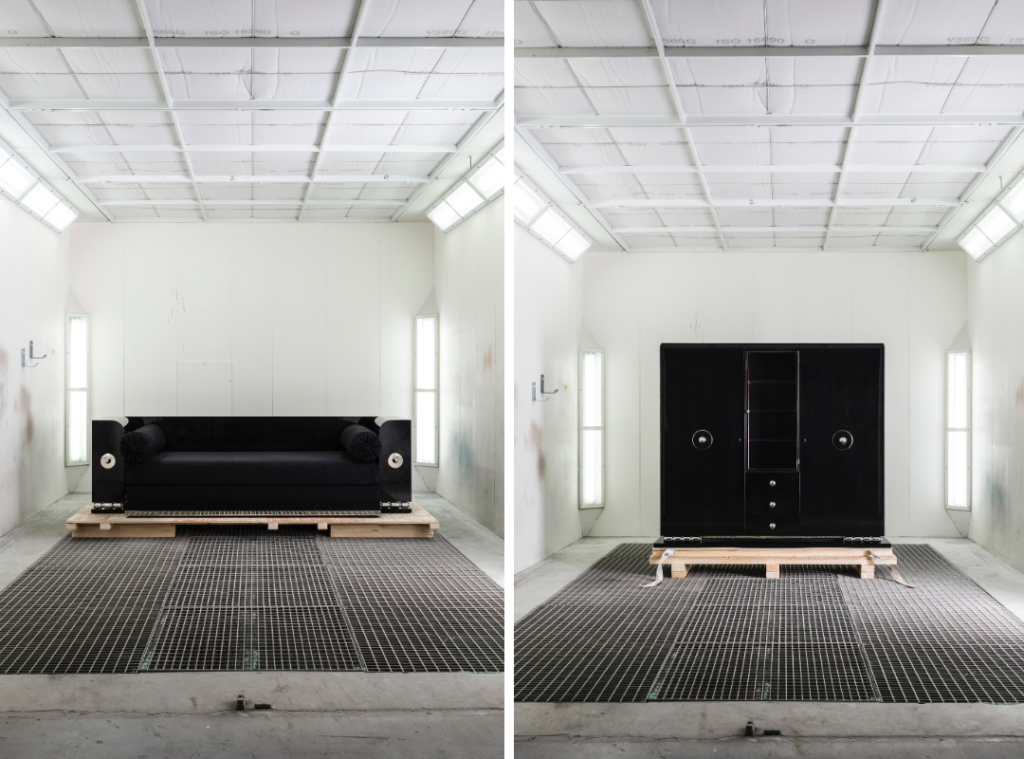
The exhibition ‘RINCK × GSL – E. Rinck’ unravels as a mirrored dialogue between two eras of design. With a rediscovered 1931 furniture suite comprising a desk, vitrine, sofa, and armchair, meticulously restored by Rinck’s workshops alongside contemporary reinterpretations by The Guild of Saint Luke, preserves the original proportions while reimagining them through a moodier, more decadent lens. The original furniture pieces retain the softness of walnut and the satin sheen of nickel, while the reinterpretations adopt a more radical tone with black-stained bird’s-eye maple, brushed steel and deep lacquer. Accompanied by a publication featuring archival sketches, photographs, and essays, the showcase stands as a poetic tribute to craftsmanship, legacy, and the enduring allure of Art Deco.