Art Confidential: Abhinit Khanna On Playing The Long Game When Collecting
Art Confidential explores the ever-evolving world of contemporary art through the eyes of Indian collectors and designers. Each edition explores emerging trends in art buying, uncovers compelling artist stories, and highlights must-see exhibitions, offering a glimpse into the world of contemporary collecting in India.
- 16 Sep '25
- 11:09 am by Manisha AR

Navigating the contemporary art world is an art in itself, and Abhinit Khanna’s journey across the globe could easily fill an entire interview on its own. Abhinit Khanna’s path has been anything but conventional. He spent over fifteen years navigating the ever-evolving landscape of contemporary art, and continues to do the same while working on Special Projects for Reliance Industries Pvt. Ltd. He began his career in India managing the studios of Jitish and Reena Kallat, before moving into editorial roles at publications such as ‘Paper,’ ‘Whitewall,’ and ‘Motherland.’ With a foundation in Media, Arts & Technology from the Rochester Institute of Technology and a deep-rooted interest in experimental art and respect for artistic practice, he has been a part of landmark art acquisition projects in India.
In 2019, he collaborated with GVK to launch the largest public art programme at Mumbai’s International Airport, ‘Jaya He.’ Before that, in 2017, he played a key role in the exhibition management and publication design of a Picasso masterpiece for Lodha Altamount. Whether through collaborations with cultural institutions or commercial galleries—such as Exhibit 320 or the Nita Mukesh Ambani Cultural Centre—Khanna remains committed to shaping conversations around contemporary art in India and beyond. Currently based in Mumbai, he works as an art advisor, helping collectors, institutions, and artists navigate the evolving art ecosystem with insight and curiosity. In this interview with Design Pataki, Khanna shares his deep-rooted interest in experimental and contemporary art.
Also read: The Ultimate Gallery Guide To Mumbai: 10 Must-Visit Art Spaces In Mumbai
Design Pataki: Is there a particular style or period you are drawn to when it comes to art?
Abhinit Khanna: Contemporary Art! I am drawn to experimental work. While I do enjoy lens-based work, I also love, when, artists work with different materials, which many contemporary Indian artists are diving into at the moment.
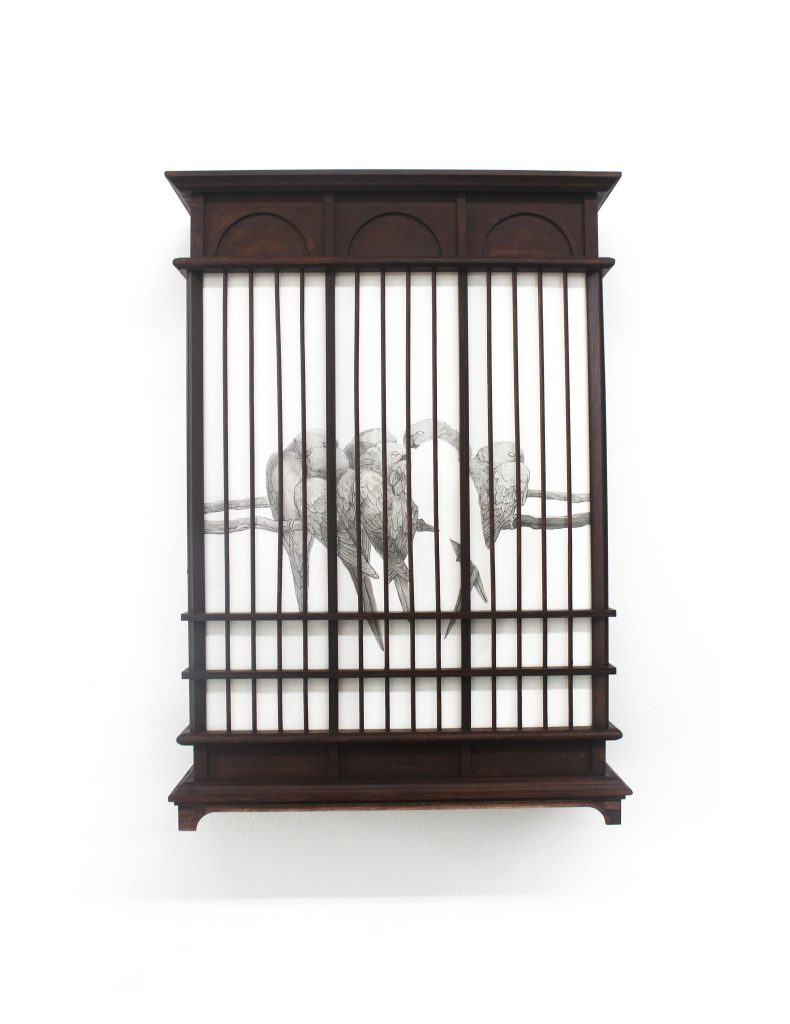
DP: Tell us about the last 5 pieces of art you purchased, and from where?
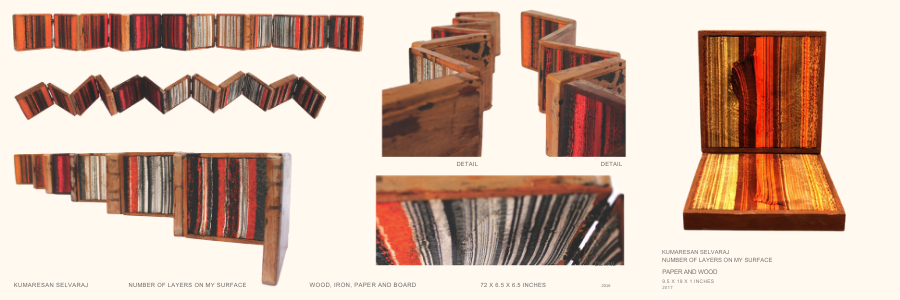
AK: Work by Vidha Saumya, from Galerie Mirchandani + Steinruecke – at that time, it felt like a lot of money for me, but I was able to acquire it and pay in installments. Then there is a piece by Firi Rehman from his show ‘Swept Away Like Leaves’ from Saskia Fernando Gallery that hangs on my wall. This stunning object that doubles as a book and can be displayed in various ways by Kumaresan Selvaraj. I got this when I worked at Exhibit 320 from the artist.
‘Still Life With A Curtain’ by Tara Kelton from Gallery Skye, which I got at the India Art Fair in 2024. It’s a puzzle that comes with a score, helping you visualise the outcome of your completed puzzle. This idyllic Goan landscape, ‘Untitled’ by Girish Naik, was made using gouache on paper. This is also an India Art Fair acquisition from HH Space.
Also read: A Guide To The Arsenale At The Venice Architecture Biennale 2025
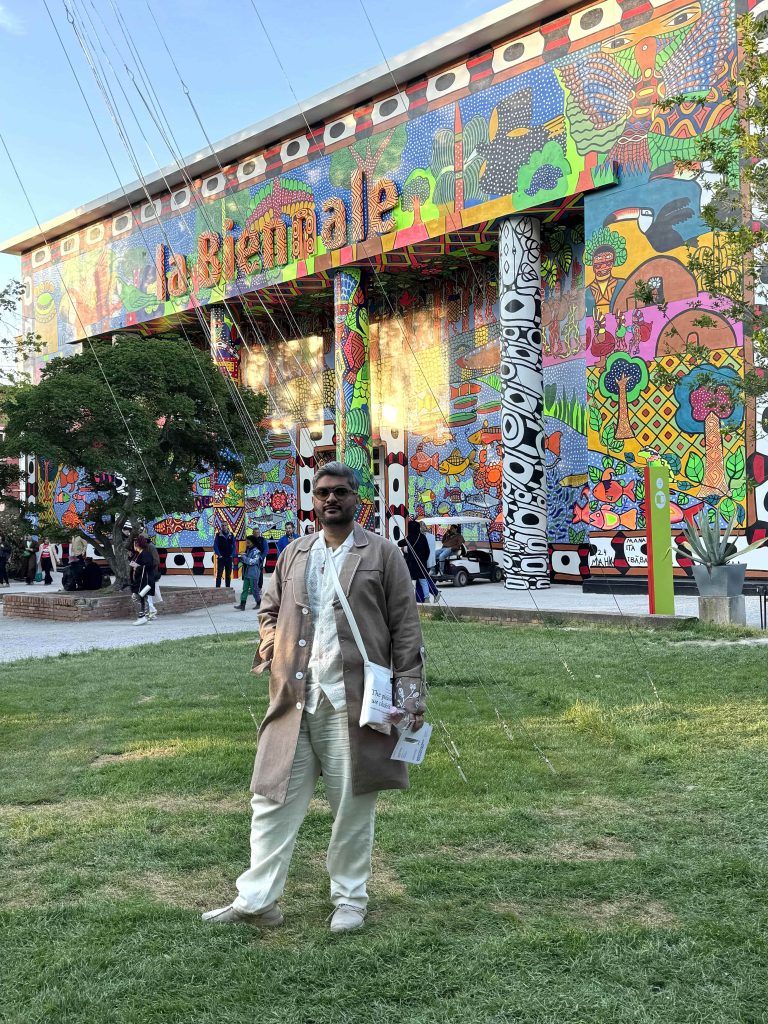
DP: Can you tell us about 3 Art Shows you’ve recently been to
AK: I want to say the Venice Biennale 2024 because Vidha Saumya recently represented Finland, which is incredible because it isn’t easy for an Indian to achieve this milestone. Ali Akbar Mehta’s user-generated montage-based cinematic experience titled ‘Purgatory Edit: The Liberation Archive for the Cyborgs of Now’ at Silent Green in Berlin, which I was sad to miss, but stood out to me. A recent group show, ‘Scapes,’ curated by Ritika Biswas at Project 88. I was glad to see artists Amol Patil & Tejal Shah’s early works included in the show.
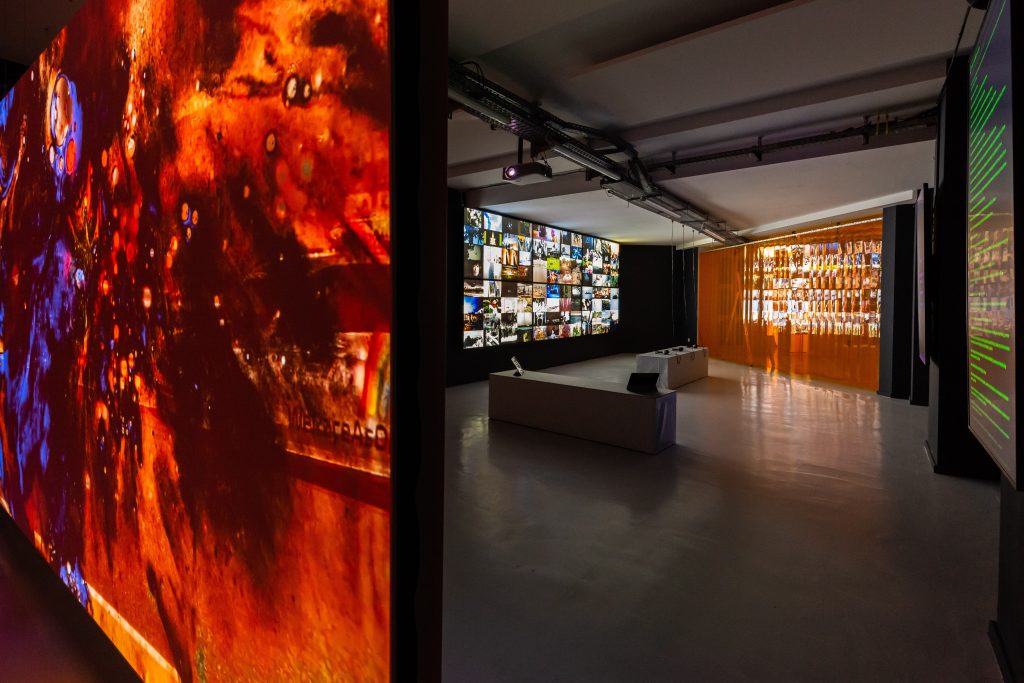
DP: Are there three upcoming art shows you’re especially looking forward to?
AK: I am looking forward to the Kochi Biennale 2025 because it’s going to be curated by Nikhil Chopra. The Ali Akbar Mehta solo show will come to India at Project 88 later next year. It will be interesting to see as it invites its audience as participants to enter a technomediated ‘Cyber Performance’ using their emotional, neural, and cognitive agency. And finally, an exhibition spotlighting ceramics across generations curated by Farah Siddiqui will be held in November at Mahendra Doshi’s private workshop and archive.
Also read: Objects of Desire – Through Salman Toor’s Queer Lens
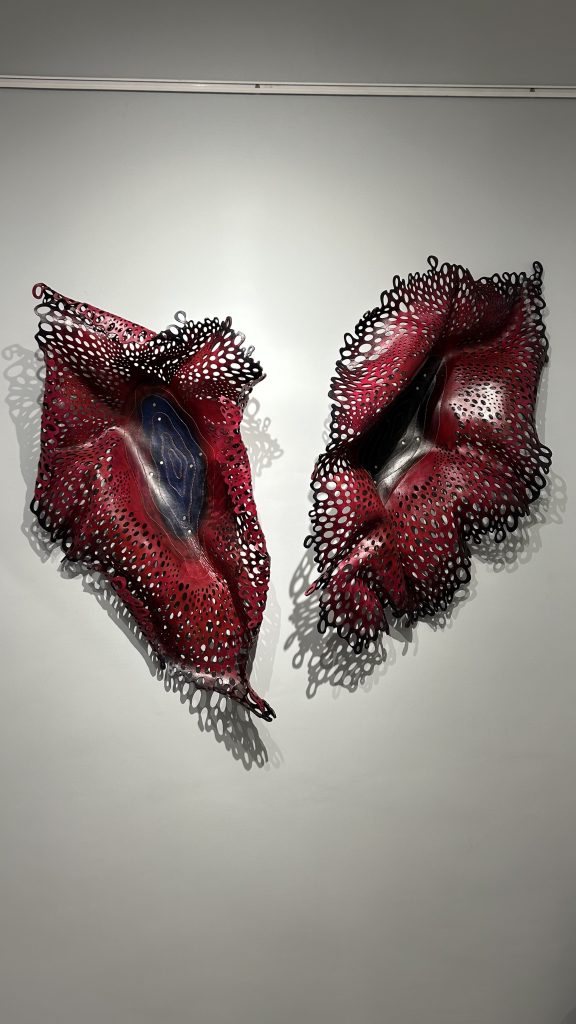
DP: A new artist you have recently discovered?
AK: Meera Dureja, who is making stunning works with leather. I came across her work at
‘Abstract Gallery’ in Bangalore curated by Cultivate Art. By using leather as her medium, Meera challenges our notions of what art can be. Her practice is a powerful reminder that art has long expanded beyond oil on canvas—into new materials, forms, and sensibilities that reflect the world we live in today.
DP: In what ways has advising others on art impacted your relationship with it?
AK: Yes, it has impacted how I view artworks in terms of pricing. I’ve gotten smarter about acquiring works because art doesn’t always have to be expensive. It’s recognising good work early on and when it’s more affordable. I’ve found that supporting an artist and watching them grow is a different kind of thrill. On a separate note, all the artwork I have bought has come at pivotal moments in my life and shaped my own way of living and viewing the world. This isn’t to say that you should buy artwork for cheap or bargain unreasonably. Even when budgets are large, it’s about timing your purchase. There have been times when I was too late to get to an artist, assuming I could get it later, only to realise all their work has been acquired!
DP: What’s next on your wishlist to collect—realistic or aspirational?
AK: Works by Matthew Krishnau and Salman Toor.